
Skeletal Trailer
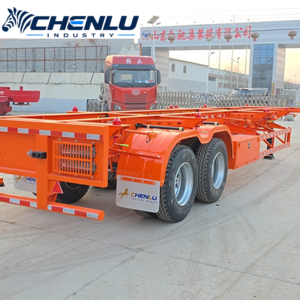
2 Axle Skeletal Semi Trailer
Lightweight dual axle frame design. Although it has fewer axles, it still provides reliable load-bearing capacity, making it particularly suitable for medium-distance, medium load cargo transportation needs.
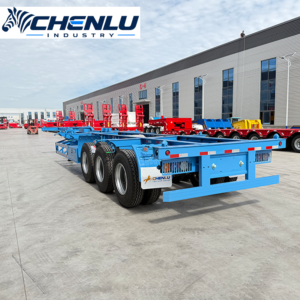
3 Axle Skeleton Trailer
3 axle frame structure design, with its optimized wheelbase configuration, provides excellent maneuverability and stability, making it suitable for long-distance transportation of standard goods such as containers and building materials.
CHAPTER 1 — Skeletal Trailer Guide: Types, Uses, Structure & Buying Considerations
1-1. What Is a Skeletal Trailer and What Is It Used For?
A skeletal trailer, also called a container chassis or skeletal container trailer, is a semi-trailer specifically designed for transporting shipping containers by road. Unlike a conventional flatbed trailer, its structure is focused on supporting the container at its designated corner positions rather than providing a full cargo deck.
Skeletal trailers are widely used in container logistics, ports, terminals, highways, freight transfer stations and multimodal transportation. Their open chassis structure allows containers to be loaded and unloaded efficiently using cranes, reach stackers or other container-handling equipment.
The basic concept is simple: the trailer provides a strong chassis, container locking points and a road-going running system, while the container itself acts as the main cargo enclosure.
1-2. How Does a Skeletal Trailer Work?
A skeletal trailer connects to a tractor through its kingpin and fifth-wheel coupling. Once connected, the trailer supports the container through its frame and container locking devices.
During transportation, the container is positioned on the chassis so that its corner castings align with the twist locks. After the container is lowered into position, the locks are engaged to prevent the container from moving relative to the trailer.
The trailer’s axles, suspension, tires and braking system then transfer the container load to the road while maintaining stability during acceleration, braking and cornering.
This design allows a loaded container to move between different transportation modes without removing the cargo from inside the container, which is one of the main advantages of intermodal container transportation.
1-3. What Types of Containers Can a Skeletal Trailer Transport?
The container size that a skeletal trailer can transport depends on its chassis configuration and locking arrangement. Common configurations are designed around standard 20ft, 40ft and 45ft containers.
A suitable chassis may use fixed or adjustable container locking positions so that different container lengths can be accommodated. Some configurations can also support two 20ft containers when the chassis is designed with the appropriate intermediate locking points.
Before choosing a trailer, buyers should confirm the actual container sizes, corner-casting positions, gross container weight and local road regulations. Container compatibility should always be checked against the specific chassis configuration rather than assumed from the trailer name alone.
| Container Size | Typical Chassis Application | Key Consideration |
|---|---|---|
| 20ft | 20ft container chassis | Check locking position and axle loading |
| 40ft | 40ft skeletal trailer | Common configuration for standard container transport |
| 45ft | 45ft container chassis | Requires appropriate chassis length and local legal clearance |
| 20ft + 20ft | Multi-position container chassis | Requires suitable intermediate locking points and axle distribution |
1-4. What Are the Main Types of Skeletal Trailers?
Skeletal trailers can be classified according to container length, chassis structure and the type of operation they are designed for.
- 20ft skeletal trailer: Designed primarily for 20ft containers.
- 40ft skeletal trailer: A common configuration for standard 40ft containers.
- 45ft container chassis: Designed for longer containers where permitted by local regulations.
- Extendable skeletal trailer: Uses an adjustable chassis structure to accommodate different container lengths.
- Container tipper chassis: Uses a tipping mechanism to assist with container unloading in suitable applications.
- Side loader container chassis: Incorporates lifting equipment for loading and unloading containers without relying entirely on external cranes.
- Terminal or yard trailer: Designed mainly for container movement within ports, terminals or industrial yards.
The correct type depends on whether the trailer will be used for highway transportation, terminal operations, specialized container handling or a combination of applications.
1-5. 20ft vs. 40ft vs. 45ft Skeletal Trailer: What Is the Difference?
The main difference is the chassis layout and container locking position. A 20ft chassis is optimized around the dimensions and loading points of a 20ft container, while 40ft and 45ft configurations require longer support structures and different locking arrangements.
| Configuration | Main Application | Important Considerations |
|---|---|---|
| 20ft | 20ft shipping containers | Compact structure and maneuverability |
| 40ft | 40ft shipping containers | Common intermodal container transport configuration |
| 45ft | 45ft containers | Requires suitable chassis length and legal road dimensions |
| Multi-position | Different container combinations | Requires carefully positioned locking devices and axle loading |
For fleets transporting several container sizes, a multi-position or adjustable chassis can provide greater flexibility. However, the additional structure and mechanisms should be evaluated against purchase cost, maintenance requirements and the actual transportation cycle.
1-6. How Do Axles and Suspension Affect Skeletal Trailer Performance?
Axle and suspension configuration directly affects the trailer’s load distribution, stability, braking performance and ability to operate on different road conditions.
Two-axle and three-axle skeletal trailers are common configurations, while additional axles may be used for heavier applications or specific local regulations. The appropriate number of axles should be determined from the container gross weight, permitted axle loads and road regulations.
Mechanical spring suspension is widely used because of its simple construction and durability. Air suspension can also be selected where ride quality, axle load management or specific market requirements make it appropriate.
The tires, axle capacity and braking system must be matched with the expected gross vehicle weight rather than selected independently.
1-7. What Are the Main Components of a Skeletal Trailer?
A skeletal trailer has a relatively open structure, but several components work together to carry and secure the container.
- Main frame: Provides the primary load-bearing structure.
- Main beams and cross members: Transfer and distribute container loads through the chassis.
- Container locks: Connect the trailer to the container corner castings.
- Kingpin: Connects the trailer to the tractor fifth wheel.
- Axles: Carry the trailer load and transmit forces to the road.
- Suspension: Supports the axles and absorbs road impacts.
- Tires and wheels: Provide road contact and load support.
- Landing gear: Supports the trailer when it is disconnected from the tractor.
- Braking system: Provides controlled braking during transportation.
- Electrical system: Supplies lighting and signaling functions.
Depending on the model, additional equipment may include spare tire carriers, toolboxes, adjustable chassis sections, hydraulic systems or specialized container handling equipment.
1-8. How Do Twist Locks Secure Containers on a Skeletal Trailer?
Twist locks are one of the most important components of a container chassis. They engage with the corner castings located at the bottom corners of the container.
When the container is lowered onto the chassis, the corner castings align with the locking devices. The twist locks are then engaged to hold the container securely in place during transportation.
A chassis may use fixed locking points or additional intermediate locks depending on the container configuration. For example, a chassis designed to carry different container lengths may require several locking positions.
Before departure, the operator should verify that every required locking device is correctly positioned and fully engaged. The condition of the locks should also be inspected regularly for wear, deformation or damage.
1-9. Skeletal Trailer Loading and Unloading: How Does It Work?
Container loading is normally performed using container-handling equipment such as a gantry crane, reach stacker or terminal lifting system.
- Position the skeletal trailer on a suitable and stable surface.
- Inspect the chassis, locking devices and braking system.
- Align the container with the chassis locking positions.
- Lower the container onto the chassis.
- Engage the required twist locks.
- Check container position and load distribution.
- Confirm that the container height and total vehicle weight comply with applicable road limits.
For specialized chassis such as side loaders or container tippers, additional hydraulic or mechanical systems may be used during loading or unloading. These systems should be operated according to the specific trailer design and operating procedures.
1-10. Skeletal Trailer vs. Flatbed Trailer: What Is the Difference?
Although both trailer types can transport containers, they are designed for different purposes.
| Feature | Skeletal Trailer | Flatbed Trailer |
|---|---|---|
| Primary purpose | Container transportation | General cargo and container transportation |
| Deck structure | Open skeletal frame | Full cargo deck |
| Container locks | Integrated into chassis | Usually installed as container lock fittings |
| General cargo | Limited | More flexible |
| Container handling | Optimized for containers | More multi-purpose |
If container transportation is the main business, a skeletal trailer provides a purpose-built solution. If the same trailer must regularly transport machinery, steel, construction materials or other non-container cargo, a flatbed may provide greater flexibility.
1-11. Skeletal Trailer Dimensions, Capacity and Container Compatibility
The dimensions of a skeletal trailer depend on the container size it is designed to transport. A typical 40ft skeletal trailer may be around 12.4 meters long and 2.5 meters wide, but actual dimensions vary according to axle configuration, chassis design, container compatibility and local regulations.
Payload capacity should not be evaluated from trailer dimensions alone. The buyer should consider the container’s gross weight, trailer tare weight, tractor capacity, axle ratings and legally permitted gross vehicle weight.
Container compatibility is equally important. The chassis must provide the correct longitudinal and transverse positions for the container corner castings, while the overall loaded height must remain within applicable road limits.
For international projects, CHENLU can configure the chassis according to the container sizes, axle requirements, road conditions and operating environment specified by the customer.
1-12. How Much Does a Skeletal Trailer Cost?
The price of a skeletal trailer varies significantly according to its size, axle configuration, suspension, braking system, steel structure, container locking arrangement and optional equipment.
A basic 20ft or 40ft skeletal trailer generally has a simpler structure than a specialized chassis equipped with hydraulic lifting, side-loading or extendable functions. Multi-axle configurations and special container combinations can also increase manufacturing cost.
Other factors that influence the final quotation include:
- 20ft, 40ft or 45ft container configuration
- Number and specification of axles
- Mechanical or air suspension
- Tire and wheel configuration
- Brake system and electrical equipment
- Fixed or adjustable twist-lock arrangement
- Hydraulic or specialized container handling equipment
- Surface treatment and paint requirements
- Customization and destination-market requirements
For this reason, a meaningful container chassis quotation should be based on the actual configuration rather than a generic price range.
1-13. How to Choose the Right Skeletal Trailer?
The right skeletal trailer should be selected according to the containers you transport, operating environment and local transportation regulations.
- Container size: Confirm whether you mainly transport 20ft, 40ft, 45ft or multiple container sizes.
- Payload requirement: Match axle capacity, suspension and braking components with the expected gross weight.
- Road conditions: Consider whether the trailer will operate mainly on highways, ports, terminals or rough roads.
- Container handling: Determine whether external cranes are available or specialized loading equipment is required.
- Flexibility: Choose fixed, multi-position or extendable configurations according to actual fleet requirements.
- Tractor compatibility: Confirm kingpin, fifth-wheel height and overall combination requirements.
- Local regulations: Check axle load, dimensions, total weight and lighting or braking requirements before ordering.
A good purchase decision balances the initial trailer cost with durability, operating efficiency, maintenance requirements and long-term suitability for the intended container transport work.
CHAPTER 2 — CHENLU INDUSTRY Skeletal Trailer Manufacturing & Custom Solutions
2-1. CHENLU INDUSTRY Skeletal Trailer Manufacturing Overview
CHENLU INDUSTRY manufactures skeletal trailers and container chassis for container transportation and intermodal logistics applications. Our approach focuses on matching the chassis structure with the container size, loading method, axle requirements, road conditions and operating environment specified by the customer.
Rather than using one configuration for every market, CHENLU can develop different combinations of frame structure, container locks, axles, suspension, tires and braking components according to the intended application.
This makes the skeletal trailer suitable for different transportation environments, from long-distance road transportation to port, terminal and industrial container handling.
2-2. Skeletal Trailer Frame and Steel Selection
The frame is the primary load-bearing structure of a skeletal trailer. It must transfer the container load from the locking points through the longitudinal beams and cross members to the suspension and axles.
CHENLU selects structural steel and frame dimensions according to the expected loading conditions and trailer configuration. Main beam design, cross-member spacing and reinforcement are considered together rather than treating each component separately.
For heavy-duty applications, the frame can be reinforced to accommodate higher operating loads or demanding road conditions. The final steel grade and structural dimensions are determined according to the customer’s requirements and the selected trailer configuration.
2-3. 20ft, 40ft and 45ft Container Chassis Configurations
CHENLU can configure skeletal trailers around different container lengths and transportation requirements.
| Configuration | Typical Application | Customization Focus |
|---|---|---|
| 20ft chassis | 20ft container transportation | Compact chassis and correct locking positions |
| 40ft chassis | 40ft container transportation | Frame length, axle distribution and container locks |
| 45ft chassis | Long-container transportation | Chassis length and local road regulations |
| Multi-position chassis | Different container combinations | Multiple locking positions and load distribution |
For customers with mixed container fleets, the locking layout and axle distribution can be designed around the actual container combinations used in daily operations.
2-4. Twist Lock and Container Locking System Design
Container locking devices are a critical part of skeletal trailer design because they provide the connection between the container and chassis.
CHENLU can configure the number and position of container locks according to the required container sizes. Fixed locks can be used for dedicated configurations, while additional or concealable locking positions can provide greater flexibility for multi-size container transportation.
The locking system must be positioned accurately so that the container corner castings align correctly when the container is lowered onto the chassis. The design also considers accessibility for inspection and operation.
2-5. Axles, Suspension, Tires and Braking Systems
CHENLU configures the running gear according to the required payload, axle load, road conditions and market requirements.
Possible configurations include different axle quantities, mechanical suspension or air suspension, and tire sizes selected according to the expected operating environment.
The braking system is selected together with the axle and tire configuration to provide suitable braking performance for the complete trailer combination. Depending on the customer’s market and requirements, different braking components and control systems can be specified.
The goal is not simply to install higher-rated components, but to create a balanced running system in which the axle, suspension, tire and brake specifications correspond to the actual vehicle weight and operating conditions.
2-6. Skeletal Trailer Main Beam and Cross-Member Structure
The main beams carry the primary longitudinal loads, while cross members distribute container loads across the chassis width and help maintain structural stability.
CHENLU’s skeletal trailer frame is designed as an integrated structural system. Beam dimensions, cross-member arrangement, container lock locations and suspension mounting points are considered together during the design stage.
For applications involving difficult roads, frequent loading cycles or heavier containers, the frame can be adapted with additional reinforcement where required.
2-7. Gooseneck, Straight Frame and Chassis Configuration
Skeletal trailers can use different front-end structures depending on the tractor, container configuration and required loading height.
A straight-frame chassis provides a relatively simple structure for standard container transportation. A gooseneck-style configuration can be used where a different front-end geometry or loading height is required.
CHENLU considers the tractor fifth-wheel arrangement, kingpin position, container height, axle loading and overall combination dimensions when selecting the chassis configuration.
2-8. Custom Skeletal Trailers for Different Container Types
Different container transportation operations can require different chassis configurations. CHENLU can customize skeletal trailers for dedicated container sizes as well as mixed container fleets.
- 20ft standard container chassis
- 40ft container chassis
- 45ft container chassis
- Multi-position container chassis
- Extendable container chassis
- Container tipper chassis
- Specialized terminal or yard configurations
For specialized applications, additional hydraulic or mechanical equipment can be incorporated when the customer requires a different loading or unloading method.
2-9. Multi-Axle and Heavy-Duty Skeletal Trailer Solutions
For higher-load applications, the number and position of axles can be adjusted to improve load distribution and comply with local axle-load regulations.
CHENLU can configure two-axle, three-axle and other axle arrangements according to the intended container weight and local legal requirements.
Heavy-duty design should consider the complete vehicle rather than axle quantity alone. Frame strength, suspension, brakes, tires, kingpin, landing gear and container locking points all need to be matched to the expected operating conditions.
2-10. CHENLU INDUSTRY Skeletal Trailer Production Process
The manufacturing process begins with confirmation of the customer’s container requirements, dimensions, axle configuration, suspension, braking system and other specifications.
- Confirm container size and operating requirements.
- Develop the chassis structure and component configuration.
- Prepare and cut structural steel components.
- Assemble and weld the main frame.
- Install cross members and container locking components.
- Install axles, suspension and running gear.
- Install braking, electrical and lighting systems.
- Complete surface preparation and painting.
- Perform final inspection and prepare the trailer for shipment.
Production details can vary according to the model and customization requirements, especially for specialized container chassis.
2-11. How CHENLU Inspects Skeletal Trailers Before Delivery
Before delivery, the completed trailer should be checked against the agreed configuration and technical requirements.
Inspection can cover the following areas:
- Overall dimensions and chassis configuration
- Main frame and welding quality
- Container lock position and operation
- Axle and suspension installation
- Tire and wheel condition
- Brake system and air lines
- Lighting and electrical system
- Kingpin and landing gear
- Paint and surface condition
- Optional hydraulic or specialized equipment
The purpose of final inspection is to ensure that the delivered skeletal trailer corresponds with the customer’s confirmed configuration and is prepared for its intended transportation environment.
2-12. Skeletal Trailer Painting, Protection, Packaging and Shipping
After manufacturing and inspection, the trailer receives the specified surface treatment and paint system. Proper surface preparation helps protect the steel structure during storage, transportation and operation.
For export transportation, CHENLU can prepare the trailer according to the selected shipping method. Depending on the shipment arrangement, protective measures may include surface protection, covering and securing components that require additional protection during ocean transportation.
Shipping arrangements may include container transportation, bulk shipment or roll-on/roll-off shipping where suitable. The final method depends on the trailer dimensions, shipping route and customer requirements.
2-13. What Information Do You Need to Order a Skeletal Trailer?
To recommend the correct skeletal trailer configuration, CHENLU INDUSTRY normally needs the following information:
- Container size: 20ft, 40ft, 45ft or multiple sizes.
- Container weight: Expected maximum gross container weight.
- Container combination: Single container or multiple-container operation.
- Axle requirement: Required axle quantity or local legal requirements.
- Suspension: Mechanical, air or other specified configuration.
- Road conditions: Highway, port, terminal, rough road or mixed operation.
- Tractor information: Fifth-wheel height, tractor configuration and relevant coupling requirements.
- Special functions: Extendable chassis, tipping system, side loader or other equipment if required.
- Destination market: Local regulations and required components or standards.
With these details, CHENLU INDUSTRY can recommend a suitable frame, axle, suspension, container locking and equipment configuration instead of providing a generic skeletal trailer specification.
Whether you need a standard 20ft or 40ft container chassis or a customized skeletal trailer for a specific logistics operation, the final configuration should be designed around the actual container dimensions, payload, tractor combination and operating environment.
Send Inquiry
Tell us the trailer model, quantity, destination port and your main transport cargo. Our sales team will reply with a suitable configuration.