

Sidewall Semi Trailer
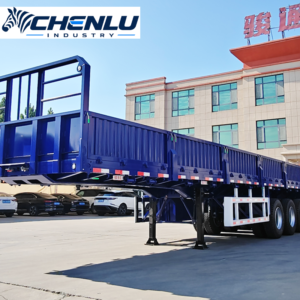
Drop Side Trailer
The grille style front fender ensures collision safety while effectively reducing wind resistance and overall vehicle weight; it also provides good ventilation and facilitates the securing of tall cargo with ropes.
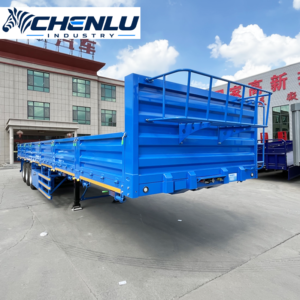
Side Wall Semi Trailer
Side Wall Trialer Featuring a high-strength, fully enclosed front panel design, and equipped with a front-end anti-collision reinforcement frame and spare tire rack, it offers extremely high safety. The side panels are removable or can be folded down, making it ideal for transporting bagged cement, agricultural products, bulk cargo, and lightweight, oversized items.
CHAPTER 1 — Side Wall Semi Trailer Guide: Types, Uses, Structure & Buying Considerations
1-1. What Is a Side Wall Semi Trailer and What Is It Used For?
A side wall semi trailer, also called a dropside semi trailer or sideboard trailer, is an open-deck cargo semi-trailer equipped with side walls around the loading platform. The side walls provide additional support and containment for cargo while keeping the trailer more flexible than an enclosed trailer.
This type of trailer is designed for medium- and long-distance transportation of general cargo, bulk cargo and goods that require a platform with removable or hinged sideboards.
Compared with a completely open flatbed trailer, the side wall structure helps keep cargo within the deck area during transportation. At the same time, the open top and accessible sides make loading and unloading easier for many types of cargo.
Depending on the configuration, a side wall semi trailer can be used for agricultural products, bagged goods, construction materials, steel products, timber, machinery and other general cargo.
1-2. What Can a Side Wall Semi Trailer Transport?
The main advantage of a side wall semi trailer is its versatility. The open deck and sideboard structure allow it to transport many types of cargo that do not require a fully enclosed body.
Typical applications include:
- Bagged cement and agricultural products
- Grain and other agricultural goods
- Steel products and metal materials
- Timber and wood products
- Tiles and construction materials
- Industrial materials and equipment
- Bulk cargo suitable for an open platform
- General cargo requiring side support
The appropriate side wall height and deck configuration depend on the cargo. Lower sideboards may be suitable for easily loaded general cargo, while higher side walls can provide additional containment for certain bulk or bagged materials.
Cargo weight, dimensions, loading method and local transportation regulations should always be considered before selecting the trailer.
1-3. What Are the Main Types of Side Wall Semi Trailers?
Side wall semi trailers can be configured with different axle arrangements, side wall heights, suspension systems and deck structures.
Common configurations include:
- 2-axle side wall semi trailer: A compact configuration for suitable cargo and regional transportation requirements.
- 3-axle side wall semi trailer: A common configuration for general cargo and higher payload applications.
- 4-axle side wall semi trailer: Designed for applications requiring additional axle capacity and load distribution.
- High side wall trailer: Uses taller sideboards for cargo requiring greater side containment.
- Grain and agricultural cargo trailer: Configured around agricultural transportation requirements.
- Side wall trailer with container locks: Can be configured to transport compatible shipping containers in addition to general cargo.
Side wall height, axle number, deck structure and suspension can be customized according to the intended application and operating region.
1-4. How Much Weight Can a Side Wall Semi Trailer Carry?
The payload of a side wall semi trailer depends on its axle configuration, frame design, suspension, tire capacity, trailer tare weight, tractor combination and applicable road regulations.
Different configurations can be designed for different payload requirements. Market configurations can include approximately 30-ton, 40-ton, 50-ton, 60-ton and higher-capacity applications, but the actual legal payload depends on the complete vehicle combination and local regulations.
A trailer should not be selected simply by looking at its advertised maximum payload. Buyers should also consider:
- Number and rating of axles
- Suspension capacity
- Main frame structure
- Deck strength
- Tire load rating
- Kingpin and fifth-wheel configuration
- Permitted gross vehicle weight
- Local axle-load limitations
The practical payload should be determined from the complete tractor-trailer combination rather than the trailer structure alone.
1-5. Side Wall Semi Trailer Dimensions and Side Wall Height
Side wall semi trailer dimensions vary according to cargo requirements, axle configuration, transportation regulations and customer specifications.
A representative three-axle side wall trailer may use an overall platform length of approximately 12,500 mm and a width of around 2,500 mm, while the overall height changes according to the selected side wall height.
Common side wall heights can include approximately 600 mm, 800 mm and 1,000 mm, although other dimensions can be manufactured for specific applications.
Important dimensional factors include:
- Overall trailer length
- Deck width
- Deck height
- Side wall height
- Axle spacing
- Kingpin position
- Ground clearance
- Container-lock position where applicable
The final dimensions should be confirmed according to the cargo, tractor, road regulations and intended operating area.
1-6. What Are the Main Components of a Side Wall Semi Trailer?
A side wall semi trailer combines a structural frame, cargo deck, sideboards, running gear and braking and electrical systems.
The major components normally include:
- Main frame: The primary load-bearing structure of the trailer.
- Main beams: Carry major structural loads through the chassis.
- Cross members: Connect and reinforce the frame beneath the cargo deck.
- Side beams: Form part of the outer deck structure.
- Sideboards: Provide side support and help contain cargo.
- Kingpin: Connects the trailer to the tractor fifth wheel.
- Landing gear: Supports the front of the trailer when disconnected from the tractor.
- Axles and tires: Support and transfer the trailer load to the road.
- Suspension: Supports the axles and absorbs road movement.
- Brake system: Provides controlled braking during transportation.
- Electrical system: Provides lighting and required electrical connections.
- Accessories: May include tool boxes, spare tire carriers, stakes, rope hooks and cargo-securing equipment.
The exact component specification depends on the trailer configuration and customer requirements.
1-7. How Does a Side Wall Semi Trailer Work?
A side wall semi trailer connects to a tractor through the kingpin and fifth-wheel coupling system. The tractor supplies the pulling force while the trailer frame, axles and suspension support the cargo.
Cargo is loaded onto the open deck and positioned according to the required load distribution. The sideboards provide lateral support and help prevent suitable cargo from moving outside the deck area.
Depending on the design, the sideboards may be fixed, removable or hinged. This allows the loading area to be adapted for different cargo-handling methods.
During transportation, the suspension absorbs road movement while the braking and electrical systems operate through connections with the tractor.
The cargo must still be properly secured. Sideboards are not a replacement for chains, straps, binders or other approved cargo-securing equipment when such restraints are required.
1-8. What Is the Difference Between a Side Wall Trailer and a Flatbed Trailer?
The main difference is the side wall structure. A flatbed trailer normally has an open level deck without permanent sideboards, while a side wall semi trailer has sideboards designed to provide additional cargo support.
| Trailer Type | Main Characteristic | Typical Application |
|---|---|---|
| Side Wall Semi Trailer | Open deck with sideboards | General cargo, bags, agricultural products and bulk cargo |
| Flatbed Trailer | Open level deck without fixed side walls | Containers, steel, machinery and oversized cargo |
| Lowbed Trailer | Low loading platform | Heavy machinery and high equipment |
| Enclosed Cargo Trailer | Enclosed cargo body | Goods requiring protection from the external environment |
A side wall trailer provides more cargo containment than a conventional flatbed while maintaining much of the loading flexibility of an open platform.
1-9. Can a Side Wall Semi Trailer Transport Shipping Containers?
Some side wall semi trailers can be equipped with container locks to transport compatible shipping containers.
When container transportation is required, the deck must be designed with suitable locking positions that correspond to the container corner castings.
This configuration can provide additional flexibility for fleets that handle both general cargo and container transportation.
However, not every side wall trailer is automatically suitable for container transportation. Buyers should confirm the container-lock arrangement, deck structure, axle configuration, legal dimensions and load capacity before ordering.
If container transportation is an important part of the application, it should be specified during the trailer design stage.
1-10. How to Load and Secure Cargo on a Side Wall Semi Trailer
The open-deck structure makes side wall trailers suitable for loading by forklifts, cranes and other cargo-handling equipment.
Before loading, the deck, sideboards and cargo-securing equipment should be inspected. Cargo should then be positioned according to its weight, dimensions and center of gravity.
The basic loading process includes:
- Check the trailer deck, sideboards and securing equipment.
- Confirm that the cargo weight is suitable for the trailer.
- Load the cargo using the appropriate handling equipment.
- Distribute the cargo according to the required axle loading.
- Check the cargo center of gravity.
- Close and secure the sideboards where applicable.
- Use chains, straps, binders, blocking or other suitable restraints when required.
- Inspect the entire load before departure.
The side walls help contain the cargo but should not be considered the only cargo-securing method. The securing system should be selected according to the cargo type and applicable transportation regulations.
1-11. Side Wall Semi Trailer Suspension, Axles and Tires
The running system has a direct influence on payload distribution, road performance, maintenance and operating life.
Three-axle side wall semi trailers are widely used for many general cargo applications, while two- and four-axle configurations can be selected for different load requirements.
Mechanical leaf spring suspension is a common option because of its relatively simple structure and suitability for many transportation environments. Air suspension can also be considered when its operating characteristics and maintenance requirements are appropriate for the application.
Tire selection should match the axle capacity and intended operating conditions. Common heavy-duty trailer tire sizes can include 12R22.5 and other specifications depending on the market.
The axle, suspension and tire combination should always be selected together with the expected payload and road regulations.
1-12. Side Wall Semi Trailer Shipping and Transportation
Side wall semi trailers can be prepared for different international shipping methods depending on their dimensions and destination.
Container shipping can be used for suitable configurations when transportation requirements allow the trailer to be prepared for container loading. Depending on the trailer size, partial disassembly or specific loading arrangements may be required.
Ro-Ro and bulk vessel transportation can also be considered for larger trailer configurations.
Before international shipment, the trailer may be prepared with appropriate protective measures such as surface protection, waterproof covering and other packaging procedures.
The final shipping method depends on trailer dimensions, shipping route, port conditions, transportation cost and customer requirements.
1-13. How to Choose the Right Side Wall Semi Trailer?
The right side wall semi trailer should be selected according to the cargo rather than simply choosing the largest available configuration.
Important factors include:
- Type of cargo
- Average and maximum cargo weight
- Cargo length, width and height
- Required side wall height
- Trailer deck dimensions
- Number of axles
- Mechanical or air suspension
- Tire specification
- Container transportation requirements
- Loading and unloading method
- Cargo-securing requirements
- Tractor specifications
- Operating country and road regulations
A suitable trailer should balance payload, structural strength, operating flexibility, maintenance requirements and legal transportation limits.
CHAPTER 2 — CHENLU INDUSTRY Side Wall Semi Trailer Manufacturing & Custom Solutions
2-1. CHENLU INDUSTRY Side Wall Semi Trailer Manufacturing Overview
CHENLU INDUSTRY manufactures side wall semi trailers for general cargo, agricultural products, construction materials, steel products and other open-deck transportation applications.
The trailer is designed as an integrated transportation system consisting of the main frame, cargo deck, sideboards, axles, suspension, tires, braking system, landing gear and electrical components.
Different markets can require different trailer dimensions, axle configurations, suspension systems and side wall heights. CHENLU can develop the trailer specification according to the customer’s cargo, tractor, road conditions and operating requirements.
The objective is to create a practical trailer configuration that provides the required payload and cargo flexibility without adding unnecessary weight or components.
2-2. Side Wall Semi Trailer Frame and Main Beam Design
The main frame is the primary load-bearing structure of a side wall semi trailer. It transfers cargo loads from the deck through the chassis to the suspension and axles.
The frame normally consists of main beams, side beams, cross members and supporting structures.
Main beam dimensions and steel thickness should be selected according to the required payload, trailer length, axle arrangement and structural design. Cross members support the cargo deck and help maintain the rigidity of the platform.
The frame design must balance structural strength and trailer tare weight. Excessive structural weight can reduce usable payload, while insufficient structural capacity can affect durability and operating safety.
2-3. Side Wall Structure and Sideboard Configuration
The side wall is one of the defining features of this trailer type. It provides additional lateral support and helps contain cargo during transportation.
Sideboards can be manufactured in different heights according to the intended application. Common configurations may use approximately 600 mm, 800 mm or 1,000 mm side walls, while custom heights can also be considered.
The sideboard structure may use flat steel panels, corrugated panels or other suitable structural designs.
Depending on the trailer specification, sideboards can be designed as fixed, removable or hinged structures. The selected arrangement should match the customer’s loading and unloading method.
Door frames and support posts can also be configured according to the required side wall height and structural strength.
2-4. Steel Selection and Trailer Structural Design
Steel selection affects the strength, durability and tare weight of the finished trailer.
CHENLU can select suitable structural steel according to the trailer design, required payload, operating conditions and manufacturing process.
High-strength steel can be considered when the project requires structural strength and weight control. Other steel grades may be selected according to the actual application.
The main frame, cross members, sideboards and supporting structures should be designed as a complete system rather than selecting every component independently.
Welding quality is also important. Controlled cutting, assembly and welding processes help maintain dimensional consistency and structural integrity during manufacturing.
2-5. Axles, Suspension, Tires and Braking Systems
CHENLU side wall semi trailers can be configured with different axle and running-gear combinations according to payload and local requirements.
Two-, three- and four-axle configurations can be considered depending on the required load distribution and operating regulations.
Mechanical leaf spring suspension is commonly used for heavy-duty cargo applications. Air suspension can also be selected where its characteristics are suitable for the operating environment.
Tire size and load rating are matched to the selected axle configuration. The braking system can be configured with appropriate air brake components and, where required, ABS or other braking-related systems.
All running components should be selected as one coordinated system to ensure that the axle capacity, suspension, tires and brakes are suitable for the intended payload.
2-6. Cargo Deck, Sideboards and Load-Securing Configuration
The cargo deck forms the working platform of the trailer and must support the expected cargo loads.
Depending on the application, the deck can use suitable steel plates or checkered plates. The selected deck thickness should be based on the cargo type, loading method and structural requirements.
Sideboards provide additional cargo containment. Cargo-securing points can also be incorporated when the application requires chains, straps, ropes or other restraints.
Additional accessories can include rope hooks, stakes, tool boxes, spare tire carriers and other equipment requested by the customer.
The final deck and sideboard configuration is therefore determined by the way the trailer will actually be loaded and operated.
2-7. Side Wall Semi Trailer Dimensions and Customization
CHENLU can customize side wall semi trailer dimensions according to cargo requirements, tractor specifications and local road regulations.
Customization can include:
- Overall trailer length
- Deck width
- Deck height
- Side wall height
- Axle spacing
- Kingpin position
- Deck plate specification
- Sideboard structure
- Container-lock positions
A representative three-axle configuration may use dimensions around 12,500 × 2,500 mm with approximately 1,000 mm side walls, but these dimensions should be treated as a configuration example rather than a universal CHENLU standard.
The final dimensions should be confirmed according to the customer’s actual cargo and operating regulations.
2-8. Custom Side Wall Trailers for Different Cargo
CHENLU can configure side wall semi trailers for different types of cargo instead of using one fixed specification for every application.
Typical solutions include:
- General cargo: Designed around cargo dimensions and required side wall height.
- Agricultural products: Configured for grain, bags and other agricultural transportation requirements.
- Construction materials: Suitable for bagged cement, tiles and other construction products.
- Steel products: Configured with suitable deck and load-distribution requirements.
- Bulk cargo: Side wall height can be adjusted according to the characteristics of the cargo.
- Container and cargo applications: Container locks can be incorporated where compatible container transportation is required.
The trailer can be developed according to the customer’s loading method, cargo weight, cargo dimensions and transportation environment.
2-9. Side Wall Semi Trailer Container Lock Configuration
A side wall semi trailer can be designed with container locks when the customer needs to transport compatible shipping containers.
The container locks are positioned on the deck according to the required container configuration. They engage with the container corner castings and help maintain the container’s position during transportation.
For a multi-purpose trailer, the deck can combine container-lock positions with an open cargo platform so that the trailer can be used for both containers and general cargo.
Container transportation should be specified before production because the deck structure, lock positions and load distribution need to be incorporated into the trailer design.
The final container configuration should also comply with the applicable container transportation and road regulations of the operating market.
2-10. CHENLU INDUSTRY Side Wall Trailer Production Process
CHENLU side wall trailer production follows a sequence from technical confirmation through structural fabrication, component installation, painting and final inspection.
A typical production process includes:
- Confirm trailer specifications, cargo requirements and technical drawings.
- Prepare structural steel and other required materials.
- Cut and prepare the main frame and cross-member components.
- Assemble and weld the main frame.
- Install the cargo deck and side wall structures.
- Install axles, suspension and running components.
- Install braking, electrical and lighting systems.
- Install landing gear and required trailer accessories.
- Complete surface preparation and corrosion protection.
- Apply primer and finishing paint.
- Complete final inspection and prepare the trailer for delivery.
Production procedures can vary according to the trailer configuration and customer requirements.
2-11. How CHENLU Inspects Side Wall Semi Trailers Before Delivery
Before delivery, the completed side wall semi trailer is checked against the approved technical configuration.
Inspection can include:
- Overall trailer dimensions
- Main frame and welding condition
- Sideboard installation and operation
- Deck condition
- Axle and suspension installation
- Tire specification and installation
- Brake system components
- Electrical and lighting system
- Landing gear operation
- Container locks where specified
- Cargo-securing accessories
- Surface coating and finishing quality
The purpose of final inspection is to confirm that the trailer matches the approved configuration and is properly prepared for delivery.
For custom projects, inspection requirements can also be discussed and confirmed during the technical design stage.
2-12. Side Wall Semi Trailer Painting, Protection and Shipping
After structural fabrication, the trailer surface can be prepared through cleaning and derusting before the protective coating system is applied.
Primer and finishing paint help protect the steel structure from environmental exposure during transportation and operation.
For international shipment, CHENLU can prepare the trailer according to the selected transportation method. Depending on trailer dimensions, shipping arrangements can include container loading, Ro-Ro transportation or bulk vessel shipment.
Additional protection can include suitable waterproof covering and other measures required for the shipping environment.
The packaging and shipping method should be selected according to trailer dimensions, destination port, shipping route and transportation requirements.
2-13. What Information Do You Need to Order a Side Wall Semi Trailer?
To develop a suitable side wall semi trailer, customers should provide information about the cargo, transportation conditions and tractor combination.
Important information includes:
- Type of cargo to be transported
- Average and maximum cargo weight
- Cargo length, width and height
- Required trailer payload
- Required trailer length and width
- Required side wall height
- Number of axles
- Mechanical or air suspension requirements
- Preferred tire specification
- Tractor specifications and fifth-wheel requirements
- Container transportation requirements
- Loading and unloading method
- Cargo-securing requirements
- Operating country or region
- Applicable road and weight regulations
With this information, CHENLU INDUSTRY can evaluate the trailer frame, sideboard structure, axle configuration, suspension, deck, braking system and other components and develop a side wall semi trailer solution suited to the intended application.
Send Inquiry
Tell us the trailer model, quantity, destination port and your main transport cargo. Our sales team will reply with a suitable configuration.