

Fuel Tanker Trailer
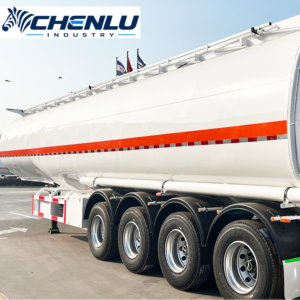
4 Axle fuel tanker semi trailer
4 Axle fuel tanker semi trailer is made of high-quality carbon steel, with evenly distributed axles for strong load-bearing capacity. The tank is equipped with multi-layer protective devices, splash valves, and safety valves. It is particularly suitable for transporting dangerous goods such as fuel oil and chemical liquids.
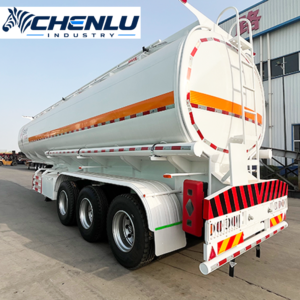
Carbon Steel Fuel Tanker Trailer
3 Axle Fuel Tanker Trailer is made of high quality carbon steel and can be divided into multiple independent compartments. It has multiple built-in baffles and is designed for the safe long-distance transportation of gasoline, diesel, crude oil and other liquids.
CHAPTER 1 — Fuel Tanker Trailer Guide: Types, Capacity, Structure & Buying Considerations
1-1. What Is a Fuel Tanker Trailer and What Is It Used For?
A fuel tanker trailer is a specialized semi-trailer designed to transport liquid fuels and other compatible liquid products in a dedicated tank body. Unlike a flatbed or dry cargo trailer, the main cargo area is an enclosed tank that is engineered around liquid containment, stability, loading and unloading requirements.
Fuel tanker trailers are commonly used for the transportation and distribution of products such as diesel, gasoline, fuel oil and other petroleum-based liquids. Depending on the cargo, tank material, equipment and applicable regulations, tanker trailers can also be configured for other liquid transportation applications.
The trailer can be designed with different tank volumes, axle configurations, suspension systems, compartments, discharge arrangements and safety equipment. Therefore, the correct fuel tanker trailer should be selected according to the liquid being transported, required capacity, operating conditions and local transportation regulations.
1-2. How Much Fuel Can a Tanker Trailer Carry?
There is no single capacity that applies to every fuel tanker trailer. Trailer capacity depends on the tank volume, liquid density, number of axles, trailer tare weight, road regulations and the specific operating requirements of the vehicle.
Common fuel tanker trailer configurations can be designed in capacities such as 30,000 liters, 35,000 liters, 40,000 liters, 45,000 liters, 50,000 liters and larger volumes. The appropriate capacity should not be selected only by tank volume because the permitted payload is also affected by axle load limits and the density of the transported liquid.
For example, two tanker trailers with the same tank volume may have different usable payloads when they use different materials, axle configurations or equipment. A higher-volume tank is therefore not automatically the best choice for every transport operation.
1-3. Fuel Tanker Trailer Capacity: Liters, Cubic Meters and Payload
Fuel tanker trailer capacity is commonly expressed in liters or cubic meters. The basic conversion is straightforward:
| Unit | Equivalent |
|---|---|
| 1 cubic meter | 1,000 liters |
| 30 cubic meters | 30,000 liters |
| 40 cubic meters | 40,000 liters |
| 45 cubic meters | 45,000 liters |
| 50 cubic meters | 50,000 liters |
| 60 cubic meters | 60,000 liters |
Tank volume and payload are not the same measurement. Volume describes how much space is available inside the tank, while payload describes the actual mass of liquid that can legally and safely be transported.
The mass of the liquid depends on its density. This means a tanker carrying the same volume of two different liquids may have different total cargo weights. For this reason, tanker capacity should always be evaluated together with the intended liquid, axle ratings and applicable road weight limits.
1-4. What Factors Determine Fuel Tanker Trailer Capacity?
Several factors determine the practical capacity of a fuel tanker trailer:
- Tank volume: The internal dimensions and overall tank design determine the available liquid volume.
- Liquid density: Different fuels and liquids produce different cargo weights at the same volume.
- Tank material: Steel and aluminum have different weight characteristics, which can influence the trailer’s tare weight and available payload.
- Axle configuration: The number and rating of axles affect how the loaded weight is distributed.
- Suspension system: Mechanical, air or other suspension configurations may be selected according to the operating environment and required load distribution.
- Compartments: Internal divisions allow different products or grades to be transported separately, but they also influence the overall tank structure.
- Road regulations: Legal gross vehicle weight and axle-load limits can determine the maximum practical payload.
- Equipment: Pumps, valves, piping, safety devices and other accessories add weight to the trailer.
For a commercial tanker project, the best capacity is therefore the one that provides an effective balance between volume, payload, road legality, operating efficiency and vehicle configuration.
1-5. What Are the Main Types of Fuel Tanker Trailers?
Fuel tanker trailers can be configured in different ways depending on the liquid, capacity and loading or unloading requirements. Common configurations include:
- Single-compartment fuel tanker trailer: A relatively simple configuration for transporting one type of liquid product.
- Multi-compartment fuel tanker trailer: The tank is divided into several independent compartments for transporting different products or grades on the same trip.
- Carbon steel tanker trailer: A commonly used configuration where structural strength and cost efficiency are important considerations.
- Aluminum tanker trailer: A lighter tank-body solution that can help reduce tare weight and increase available payload within applicable legal limits.
- Stainless steel tanker trailer: Used for applications where the characteristics of the transported liquid require a different tank material.
- Special-purpose liquid tanker: Tank trailers designed around specific liquid properties, temperature requirements or industry standards.
The trailer type should always be selected according to the cargo rather than simply choosing the largest tank available.
1-6. Carbon Steel vs. Aluminum Fuel Tanker Trailer
Carbon steel and aluminum are two common material choices for tanker construction, and each has different characteristics.
| Consideration | Carbon Steel Tanker | Aluminum Tanker |
|---|---|---|
| Structural strength | High structural strength and widely used for heavy-duty applications | Good strength-to-weight performance when properly designed |
| Weight | Generally heavier | Generally lighter |
| Payload potential | Depends on the complete trailer configuration | Lower tare weight can provide additional payload potential where legally permitted |
| Corrosion characteristics | Requires suitable surface protection and maintenance | Good corrosion resistance in many applications |
| Cost | Often more economical | Usually involves higher material and manufacturing costs |
The better material depends on the cargo, operating environment, required payload, budget and applicable technical requirements. Material selection should be considered together with tank structure rather than evaluated by material name alone.
1-7. How Many Compartments Does a Fuel Tanker Trailer Need?
A multi-compartment fuel tanker trailer divides the tank into separate sections. This configuration is useful when one trailer needs to transport different fuel grades or products while keeping them physically separated.
For example, a tanker can be configured with several compartments of different capacities instead of using one large undivided tank. This gives operators more flexibility when delivering fuel to multiple destinations or handling different products during the same route.
Compartment design also affects liquid movement inside the tank. Internal partitions and baffles help control liquid movement and contribute to more predictable load distribution during transportation.
The number and volume of compartments should therefore be determined according to the delivery plan, product types, loading system and local regulations.
1-8. Fuel Tanker Trailer Dimensions and Tank Shape
Fuel tanker trailer dimensions vary according to tank volume, axle configuration, tank geometry, suspension, equipment and road regulations. A typical semi-trailer tanker may be approximately 9,500–12,500 mm long and around 2,500–2,550 mm wide, while the overall height depends on the tank diameter, chassis and accessories.
These figures are general design references rather than universal standards. A 30,000-liter tanker and a 60,000-liter tanker will naturally require different dimensions and configurations.
Common tank shapes include round, oval and other optimized cross-sections. The shape influences the tank’s structural behavior, center of gravity, usable volume and overall trailer dimensions.
When designing a tanker for a specific market, CHENLU can adjust the tank volume and overall dimensions around the customer’s required payload, tractor configuration, road conditions and applicable regulations.
1-9. How Does a Fuel Tanker Trailer Loading and Unloading System Work?
A fuel tanker trailer can be equipped with different loading and unloading arrangements depending on the cargo and operating requirements. The system may include loading connections, discharge valves, pipelines, pumps, control valves and other dedicated equipment.
In a typical unloading process, the liquid flows through the designated discharge system and is transferred to the receiving facility. Depending on the configuration, unloading can use gravity, a pump system or equipment supplied by the loading or receiving station.
Bottom-loading configurations can also be used for applications that require dedicated loading connections and additional safety equipment. The exact arrangement should be selected according to the liquid, loading facility and applicable regulations.
Because fuel is potentially flammable, loading and unloading equipment must be designed and operated according to the relevant safety requirements. Electrical, grounding, vapor-management and emergency shut-off provisions may also be required depending on the application.
1-10. What Are the Main Components of a Fuel Tanker Trailer?
A fuel tanker trailer is more than a tank body. The complete vehicle consists of several systems that work together for transportation, loading, unloading and road operation.
- Tank body: The main container for the liquid cargo.
- Internal baffles: Help divide the internal space and control liquid movement.
- Manhole and tank cover: Provide access and may integrate breathing, inspection or other safety-related equipment.
- Loading and discharge system: Includes valves, piping and connections required for transferring the liquid.
- Emergency shut-off equipment: May be incorporated into the liquid transfer system depending on the required configuration.
- Main frame: Supports the tank and transfers the loaded weight to the running gear.
- Axles and suspension: Support the trailer and distribute the road load.
- Braking system: Provides controlled braking for the loaded trailer.
- Landing gear and kingpin: Connect the trailer to the tractor and support it when uncoupled.
- Lights and electrical system: Provide required lighting and electrical functions.
1-11. Fuel Tanker Trailer Suspension, Axles and Braking Systems
The running gear of a fuel tanker trailer has a direct relationship with load distribution, road stability and operating performance. Axle number and axle rating should be selected according to the tank capacity, liquid density, expected payload and local legal requirements.
Mechanical suspension is widely used for heavy-duty transportation because of its straightforward structure and durability. Air suspension can provide improved ride characteristics and may be selected where lower vibration, load management or additional suspension functions are required.
The braking system should also be matched to the trailer configuration and local regulations. Depending on the market and specification, pneumatic braking equipment, ABS or EBS and other braking components may be incorporated into the trailer.
The complete axle, suspension, tire and braking package should be treated as one system rather than selected independently.
1-12. What Liquids Can a Tanker Trailer Transport?
Fuel tanker trailers are primarily associated with liquid fuel transportation, including products such as diesel, gasoline and fuel oil. Other liquids may require different tank materials, internal coatings, valves, seals or specialized tanker designs.
Some tanker configurations can be developed for edible oils, chemical liquids or other industrial liquids, but a fuel tanker specification should not automatically be considered suitable for every liquid.
Before selecting a tanker, the buyer should identify the exact cargo, including its density, chemical characteristics, temperature requirements and applicable transportation regulations. This information determines the appropriate tank material and equipment.
1-13. How to Choose the Right Fuel Tanker Trailer?
Choosing a fuel tanker trailer should begin with the transportation task rather than the trailer price alone. The following factors are particularly important:
- Identify the liquid: Confirm exactly what product will be transported.
- Determine the required volume: Estimate the required liters or cubic meters per trip.
- Calculate the practical payload: Consider liquid density, tare weight and legal axle loads.
- Select the tank material: Compare steel, aluminum or other suitable materials according to the application.
- Choose the compartment layout: Decide whether a single tank or multi-compartment configuration is required.
- Select the running gear: Match axles, suspension, tires and brakes to the expected load and road conditions.
- Confirm loading and unloading requirements: Specify top loading, bottom loading, pump systems, discharge valves and connection types as required.
- Check local requirements: Confirm applicable regulations and certification requirements before production.
- Consider the complete operating cost: Initial price, tare weight, maintenance, payload efficiency and service requirements all affect long-term value.
CHAPTER 2 — CHENLU INDUSTRY Fuel Tanker Trailer Manufacturing & Custom Solutions
2-1. CHENLU INDUSTRY Fuel Tanker Trailer Manufacturing Overview
CHENLU INDUSTRY develops and manufactures fuel tanker trailers for different liquid transportation applications. Rather than using one fixed tanker specification for every customer, the trailer can be configured around the required capacity, tank material, compartment arrangement, axle configuration, suspension and unloading system.
Our tanker trailer solutions can be developed using different tank materials and structural configurations according to the intended cargo and operating environment. The objective is to balance tank strength, tare weight, usable capacity, durability and transportation requirements.
For export projects, the trailer configuration can also be adjusted around the customer’s tractor, road conditions, local regulations and preferred component specifications.
2-2. How CHENLU Designs Fuel Tanker Trailers for Different Applications
Every tanker project begins with the transportation requirement. The same tank volume may require different designs when the customer operates under different road conditions or transports different liquids.
CHENLU considers factors such as:
- Required tank volume and payload
- Type and density of the transported liquid
- Tank material and structural requirements
- Number of compartments
- Loading and unloading method
- Axle number and axle rating
- Mechanical or air suspension
- Brake and electrical configuration
- Tractor compatibility
- Road conditions and local regulations
This approach allows the tanker to be configured for its actual working environment instead of relying on a generic specification.
2-3. Fuel Tank Material and Thickness Selection
The tank body is one of the most important parts of a fuel tanker trailer. CHENLU can work with different material solutions according to the cargo, required weight, structural requirements and application.
Carbon steel provides a strong and widely used solution for many heavy-duty tanker applications. Aluminum alloy can reduce tank-body weight and may provide additional payload potential where the vehicle remains within legal weight limits. Stainless steel or other specialized materials may be considered for liquids requiring different corrosion or cleanliness characteristics.
Tank thickness is not selected simply by choosing the thickest available plate. It needs to be considered together with tank geometry, reinforcement, internal structure, welding design, operating pressure and applicable technical requirements.
2-4. Tank Shape, Internal Structure and Baffles
The geometry of the tank affects its volume, center of gravity, structural behavior and overall trailer dimensions. CHENLU can configure different tank shapes according to the required capacity and application.
Internal baffles and partitions are important in tanker design because liquid cargo can move when the trailer accelerates, brakes or changes direction. A properly designed internal structure helps control this movement and supports more predictable load distribution.
For multi-compartment tankers, the internal structure is also designed around the required compartment capacities and liquid transfer system.
2-5. Fuel Tanker Trailer Compartments and Discharge Configuration
CHENLU can customize the number and arrangement of tanker compartments according to the customer’s transportation plan.
A multi-compartment tanker can be useful when different fuel grades or liquid products need to be delivered on the same route. Each compartment can be configured with the appropriate transfer connections and discharge arrangement.
Discharge outlets can also be positioned according to the customer’s operating requirements. The final configuration can include different valve sizes, pipe arrangements and connection systems depending on the loading and unloading facility.
The compartment layout should be confirmed before production because it affects the internal tank structure, piping and overall equipment arrangement.
2-6. Loading, Unloading and Safety Equipment Configuration
Fuel transportation requires more than a sealed tank. The loading and unloading system must be designed around the way the trailer will actually operate.
Depending on the project, CHENLU can configure equipment such as manholes, breathing equipment, discharge valves, pipelines, emergency shut-off components and other tanker accessories required by the application.
Bottom-loading systems can also be specified where the customer’s loading facility and regulations require them. Other equipment may include vapor-management or anti-overfill provisions where applicable.
Because fuel transportation involves flammable liquids, the final equipment configuration should always be confirmed against the applicable dangerous-goods transportation standards and operating procedures for the destination market.
2-7. Axles, Suspension, Tires and Braking Systems
CHENLU fuel tanker trailers can be configured with different axle numbers and running-gear solutions according to capacity and market requirements.
| Configuration | Typical Application Consideration |
|---|---|
| 2-Axle | Suitable for selected lower-capacity configurations where local regulations permit |
| 3-Axle | A common configuration for medium and higher-capacity tanker applications |
| 4-Axle | Used where higher load distribution capacity is required and permitted |
Suspension can be selected between mechanical and air suspension depending on the customer’s road conditions, payload requirements and operating preferences.
Tire size, braking equipment and axle ratings should be selected as part of the complete running-gear package. The final configuration must match the legal axle loads and gross vehicle weight requirements of the destination market.
2-8. Fuel Tanker Trailer Capacity and Dimension Customization
Fuel tanker trailer capacity can be customized for different transportation requirements. Common project ranges may include approximately 30,000 to 60,000 liters, while larger or specialized configurations can be developed when the road regulations and vehicle configuration allow them.
CHENLU can also customize:
- Tank volume
- Overall trailer length and width
- Tank diameter and shape
- Number and size of compartments
- Axle configuration
- Suspension type
- Discharge outlet position
- Valve and piping configuration
- Tank material
- Accessory and safety equipment
For this reason, dimensions shown on a product page should be treated as a configuration reference rather than a universal specification. The final dimensions are confirmed according to the selected capacity and customer requirements.
2-9. CHENLU INDUSTRY Fuel Tanker Trailer Production Process
The manufacturing process of a fuel tanker trailer involves both tank fabrication and trailer assembly. CHENLU organizes the production process around structural accuracy, welding quality, component installation and final inspection.
- Design confirmation: Tank volume, dimensions, material, compartments and running gear are confirmed.
- Material preparation: Steel or aluminum materials are prepared according to the approved design.
- Tank fabrication: Tank sections, heads, internal structures and reinforcement components are manufactured.
- Welding and assembly: The tank body is assembled using the specified welding process.
- Frame production: The trailer frame and running-gear mounting points are fabricated.
- Surface treatment: The tank and frame receive the required preparation and coating.
- Component installation: Axles, suspension, braking equipment, valves, piping and accessories are installed.
- Final inspection: The complete tanker is checked before shipment.
2-10. How CHENLU Inspects Fuel Tanker Trailers Before Delivery
Inspection is an important stage before a tanker trailer leaves the factory. The exact inspection items depend on the tanker specification and applicable requirements, but the process can include checking the tank body, welds, valves, piping, structural components and running gear.
For the tank system, attention is given to sealing and the condition of the relevant connections. The chassis is checked for correct assembly of axles, suspension, braking equipment, lights and other components.
The final inspection also verifies that the manufactured trailer matches the approved configuration, including capacity, compartment arrangement, accessories and customer-specified components.
For regulated dangerous-goods applications, additional inspection and certification requirements may apply depending on the destination market and the type of liquid transported.
2-11. Fuel Tanker Trailer Surface Protection, Packaging and Shipping
After manufacturing and inspection, the tanker trailer needs appropriate surface protection and export preparation. Coating requirements can vary according to the tank material, operating environment and customer preference.
For international shipment, exposed surfaces and sensitive components can be protected against moisture, dust and corrosion during transportation. The appropriate shipping method depends on the trailer dimensions, configuration and destination.
Possible transportation methods can include Ro-Ro shipping, bulk shipment or other suitable cargo arrangements. The final shipping method is selected according to the tanker size and the requirements of the destination port.
2-12. CHENLU Fuel Tanker Trailer Configurations and Custom Solutions
CHENLU INDUSTRY can provide fuel tanker trailer configurations for different capacities and transportation requirements. Depending on the project, customers can specify tank volume, material, compartment arrangement, axle configuration, suspension and loading or unloading equipment.
Typical project configurations may include:
- 3-axle fuel tanker trailers
- 4-axle fuel tanker trailers
- 30,000-liter fuel tanker trailers
- 40,000-liter fuel tanker trailers
- 45,000-liter fuel tanker trailers
- 50,000-liter fuel tanker trailers
- 60,000-liter and larger customized tanker configurations
- Multi-compartment fuel tanker trailers
- Carbon steel tanker trailers
- Aluminum tanker trailers
- Specialized liquid tanker configurations
The actual specification is developed according to the customer’s cargo, road regulations, tractor combination and operating requirements rather than applying one standard model to every project.
2-13. What Information Do You Need to Order a Custom Fuel Tanker Trailer?
To configure a suitable fuel tanker trailer, customers can provide the following information:
- Transported liquid: Specify the exact fuel or liquid product.
- Required capacity: Provide the target volume in liters or cubic meters.
- Tank material: Indicate whether carbon steel, aluminum or another suitable material is preferred.
- Number of compartments: Specify whether the tanker will carry one product or several products.
- Axle configuration: Confirm the preferred axle number or the required payload.
- Suspension: Choose mechanical, air or another suitable suspension system.
- Loading and unloading method: Provide the requirements for valves, pipes, pumps, bottom loading or other equipment.
- Tractor information: If available, provide the tractor model and fifth-wheel specifications.
- Destination market: The destination helps determine applicable dimensions, axle loads, braking requirements and regulatory requirements.
- Special requirements: Include preferred components, colors, accessories, certifications or other customization needs.
With these details, CHENLU INDUSTRY can develop a tanker trailer configuration that is matched to the customer’s actual transportation requirements instead of relying on a generic specification.
Send Inquiry
Tell us the trailer model, quantity, destination port and your main transport cargo. Our sales team will reply with a suitable configuration.