
Aluminum Tanker Trailer
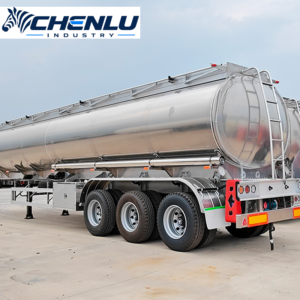
Aluminum Fuel Tank Trailer for Sale
3 Axle Aluminium Fuel Tanker Trailer is made of lightweight aluminum alloy, reducing the overall weight by 30%–40%. The aluminum alloy surface can naturally form a dense protective oxide film, which is highly corrosion resistant and has high load-bearing efficiency and low fuel consumption.
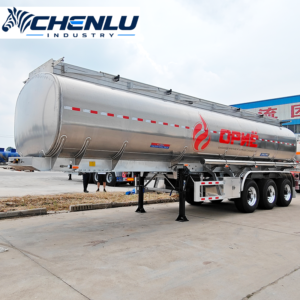
Aluminum Fuel Tanker Trailer
3 axle aluminum tank semi trailer uses high quality aluminum alloy to manufacture the tank, offering significant advantages such as light weight and strong corrosion resistance. The three axles are evenly distributed, ensuring stable load-bearing capacity, and it is equipped with a standard splash guard for reliable sealing performance.
CHAPTER 1 — Aluminum Fuel Tanker Trailer Guide: Capacity, Materials, Structure & Buying Considerations
1-1. What Is an Aluminum Fuel Tanker Trailer and What Is It Used For?
An aluminum fuel tanker trailer is a specialized semi-trailer that uses an aluminum alloy tank body to transport liquid cargo. It is commonly used for petroleum products and other liquids where reducing trailer tare weight and maintaining suitable corrosion resistance are important considerations.
Compared with a conventional steel tanker, an aluminum tanker can provide a lower tank-body weight while maintaining the structural characteristics required for its intended application. The resulting weight difference can be particularly useful for operators who need to maximize legal payload without increasing the overall vehicle weight.
Aluminum tanker trailers can be configured with different tank volumes, compartment layouts, axle arrangements, suspension systems and loading or unloading equipment. The final configuration depends on the transported liquid, required payload, road regulations and operating conditions.
1-2. How Much Can an Aluminum Fuel Tanker Trailer Carry?
The capacity of an aluminum fuel tanker trailer is determined by its tank volume and complete vehicle configuration. Common configurations can be designed around approximately 30,000 to 60,000 liters, while larger capacities can also be developed when the dimensions, axle configuration and local regulations allow them.
For example, aluminum tanker trailers may be configured around 40,000 liters, 45,000 liters, 50,000 liters or other customized capacities. The tank volume itself, however, does not represent the maximum legal payload.
The actual cargo weight depends on the density of the transported liquid. Trailer tare weight, axle ratings, tractor configuration and local gross-weight regulations must also be considered before determining the usable payload.
Therefore, an aluminum tanker should be selected based on the complete transportation requirement rather than tank volume alone.
1-3. Why Is Aluminum Used for Fuel Tanker Trailers?
Aluminum alloy is used in tanker manufacturing mainly because it offers a favorable strength-to-weight balance. Compared with steel, aluminum has a significantly lower material density, which allows a tanker body to be designed with lower tare weight when the structure is properly engineered.
This can create an important advantage for fuel transportation. When the trailer itself weighs less, a greater portion of the legally permitted vehicle weight may potentially be allocated to cargo.
Aluminum also provides good corrosion resistance in many applications. This can be beneficial for tanker bodies that operate in environments where moisture, road salt or other corrosive conditions are present.
However, aluminum is not automatically the best choice for every tanker. Material selection should be based on the transported liquid, structural requirements, manufacturing process, regulations and total operating requirements.
1-4. Aluminum vs. Carbon Steel Fuel Tanker Trailer
Aluminum and carbon steel tanker trailers have different characteristics. The better option depends on the customer’s priorities rather than one material being universally superior.
| Consideration | Aluminum Tanker | Carbon Steel Tanker |
|---|---|---|
| Tank weight | Lower material density can reduce tank-body weight | Generally heavier |
| Payload potential | Lower tare weight can provide additional payload potential within legal limits | Payload depends on the complete vehicle weight |
| Corrosion resistance | Good natural corrosion resistance in many environments | Requires suitable coating and corrosion protection |
| Manufacturing | Requires suitable aluminum welding and fabrication processes | Generally easier to fabricate and weld |
| Initial cost | Usually higher material and manufacturing cost | Often more economical initially |
| Typical advantage | Weight reduction and corrosion resistance | Strength, availability and cost efficiency |
The choice should also take into account the type of liquid, expected annual mileage, payload requirements, road conditions and long-term maintenance strategy.
1-5. What Are the Main Advantages of an Aluminum Tanker Trailer?
An aluminum tanker trailer can provide several advantages for liquid transportation applications:
- Lower tare weight: Aluminum has a lower density than steel, which can reduce the weight of the tank body.
- Payload efficiency: A lighter tanker can potentially allocate more of the legal gross weight to cargo.
- Corrosion resistance: Aluminum naturally forms a protective oxide layer and can perform well in many corrosive environments.
- Reduced maintenance related to corrosion: The tank body does not rely on the same type of conventional corrosion protection used for carbon steel.
- Long-term appearance: Properly selected and maintained aluminum surfaces can retain a clean appearance over long-term use.
- Recyclability: Aluminum has significant recycling value at the end of the product’s service life.
These advantages are particularly relevant when the tanker operates frequently and payload efficiency has a direct effect on transportation economics.
1-6. How Does Aluminum Tank Weight Affect Payload?
One of the main reasons customers consider an aluminum fuel tanker trailer is the potential weight saving compared with an equivalent steel tank.
For example, if two tanker trailers have similar tank volumes and running gear but use different tank materials, the aluminum version can have a lower tare weight because aluminum is much less dense than carbon steel.
This does not mean that every aluminum tanker automatically carries more cargo. The actual payload is still limited by the gross vehicle weight, axle load limits, tank structure, tractor capacity and local regulations.
The practical benefit is that weight saved in the trailer structure can potentially be converted into additional legal payload. For high-mileage fuel transportation, this can make the material choice an important part of the overall operating-cost calculation.
1-7. What Liquids Can an Aluminum Tanker Trailer Transport?
Aluminum tanker trailers are commonly associated with petroleum products and can be configured for suitable liquid transportation applications according to the material compatibility and applicable regulations.
Depending on the tank specification, possible cargo applications may include:
- Diesel fuel
- Gasoline and petrol products
- Fuel oil
- Selected petroleum products
- Edible oils or other liquid food products when the tank is specifically designed and approved for that application
- Other compatible liquids where the tank material and equipment meet the required specifications
Not every aluminum tanker is suitable for every liquid. Chemical compatibility, cleanliness requirements, tank fittings, seals, valves and applicable transportation regulations should be checked before using the trailer for a new type of cargo.
1-8. How Many Compartments Does an Aluminum Fuel Tanker Need?
An aluminum fuel tanker trailer can be designed with either a single tank compartment or multiple independent compartments.
A single-compartment tanker is suitable when the trailer is dedicated to one liquid product and a simple tank layout is preferred. A multi-compartment tanker is more flexible when different fuel grades or products need to be transported on the same route.
For example, a tanker can be divided into two, three, four or more compartments with different compartment capacities. This allows the operator to deliver different products without mixing them inside one tank.
Internal partitions and baffles also influence liquid movement and load distribution. The number and arrangement of compartments should therefore be designed around the customer’s delivery requirements rather than selected only by the total tank volume.
1-9. Aluminum Fuel Tanker Trailer Dimensions and Tank Shape
The dimensions of an aluminum fuel tanker trailer depend on tank capacity, tank diameter, compartment arrangement, axle configuration, suspension and the equipment installed on the trailer.
As a general reference, a medium-capacity aluminum tanker may be approximately 11,500 mm long, 2,500 mm wide and around 3,700 mm high, but these dimensions are not universal. A different tank volume or axle configuration can result in a different overall size.
Tank cross-sections may be round, oval or another optimized shape. The selected geometry affects usable volume, center of gravity, structural strength and the overall height of the trailer.
For export applications, dimensions should also be checked against the destination country’s maximum width, height, length and axle-load requirements.
1-10. What Are the Main Components of an Aluminum Fuel Tanker Trailer?
The aluminum tank body is the most visible component, but a complete aluminum fuel tanker trailer contains several interconnected systems.
- Aluminum tank body: The primary container for the liquid cargo.
- Tank heads: Front and rear structural sections that complete the tank body.
- Internal baffles: Help control liquid movement and divide the tank structure where required.
- Manholes: Provide access for inspection and maintenance and can integrate additional tank equipment.
- Loading and discharge valves: Control liquid transfer into and out of the tank.
- Pipelines and connections: Provide the required route for liquid transfer.
- Main frame: Supports the tank and transfers the load to the axles.
- Axles and suspension: Support the loaded tanker during road operation.
- Braking system: Provides controlled braking for the trailer.
- Landing gear and kingpin: Connect the semi-trailer to the tractor and support it when uncoupled.
The exact component selection depends on the tank capacity, cargo and operating requirements.
1-11. Aluminum Fuel Tanker Trailer Suspension, Axles and Braking
Reducing tank weight does not eliminate the need for a properly designed running gear system. Axles, suspension, tires and brakes must still be matched to the loaded tanker and the expected operating environment.
Three-axle configurations are widely used for medium and higher-capacity semi-tanker applications, while four-axle configurations may be selected where additional load distribution is required and permitted by local regulations.
Mechanical suspension provides a straightforward and durable solution for many heavy-duty applications. Air suspension can be selected where improved ride characteristics, vibration control or additional suspension functions are required.
The braking system should be selected according to the trailer weight, axle configuration and destination requirements. ABS, EBS and other braking components may be incorporated depending on the specification.
1-12. How Does the Loading and Unloading System Work?
The loading and unloading system of an aluminum fuel tanker trailer transfers liquid between the tanker and the storage or distribution facility.
Depending on the application, the tanker can be equipped with top-loading or bottom-loading connections, discharge valves, pipelines, pumps and other transfer equipment.
Bottom-loading systems can be useful for applications where the loading station is designed around dedicated bottom connections. Additional equipment such as emergency shut-off valves, vapor-management systems and anti-overfill devices may also be required for specific fuel transportation applications.
The complete system should be designed around the customer’s loading and unloading facilities. Valve sizes, outlet positions and pipe routing can therefore be customized during the trailer design stage.
1-13. How to Choose an Aluminum Fuel Tanker Trailer?
When selecting an aluminum fuel tanker trailer, the most important question is not simply how many liters the tank can hold. The trailer should be evaluated as a complete transportation system.
- Determine the cargo: Identify the exact fuel or liquid product.
- Choose the required volume: Determine the required liters or cubic meters per trip.
- Calculate payload requirements: Consider liquid density, trailer tare weight and legal gross weight.
- Choose the tank material: Compare aluminum with carbon steel based on payload, corrosion resistance and budget.
- Select the compartment layout: Determine whether one or several products will be transported.
- Choose the running gear: Select axle number, suspension, tires and brakes according to the loaded weight.
- Specify the transfer system: Confirm loading method, valves, pipes, pumps and discharge positions.
- Check destination requirements: Confirm local road dimensions, axle limits and applicable tanker regulations.
- Consider total operating cost: Compare purchase cost with payload efficiency, maintenance and expected operating conditions.
CHAPTER 2 — CHENLU INDUSTRY Aluminum Fuel Tanker Trailer Manufacturing & Custom Solutions
2-1. CHENLU INDUSTRY Aluminum Fuel Tanker Trailer Manufacturing Overview
CHENLU INDUSTRY develops aluminum fuel tanker trailers for customers who require a combination of liquid transportation capacity, reduced tare weight and a customized tanker configuration.
Our aluminum tanker solutions can be developed around different tank volumes, compartment layouts, axle configurations, suspension systems and loading or unloading requirements.
Instead of using one fixed specification for every project, CHENLU evaluates the complete trailer configuration according to the customer’s cargo, tractor combination, road conditions and destination-market requirements.
This allows the aluminum tank body, running gear and transfer equipment to work together as one complete tanker system.
2-2. How CHENLU Designs Aluminum Tanker Trailers for Different Applications
The design of an aluminum fuel tanker begins with the intended transportation task. Tank volume, material, compartment arrangement and running gear are considered together before the final configuration is confirmed.
CHENLU can customize the tanker around factors such as:
- Required tank volume
- Liquid type and density
- Aluminum alloy requirements
- Single or multi-compartment design
- Tank dimensions and shape
- Axle number and axle rating
- Mechanical or air suspension
- Loading and unloading method
- Valve and pipeline arrangement
- Braking and electrical configuration
- Destination-market requirements
The goal is to reduce unnecessary trailer weight while maintaining the structural and operational characteristics required for the customer’s application.
2-3. Aluminum Alloy Selection for Fuel Tanker Trailers
The performance of an aluminum tanker depends not only on using aluminum but also on selecting an appropriate alloy and manufacturing process for the intended structure.
Different aluminum alloys can have different characteristics in terms of strength, weldability, corrosion resistance and fabrication requirements. CHENLU selects the material according to the tank design and application rather than treating all aluminum alloys as identical.
Material selection also needs to consider welding. Aluminum tanker fabrication requires suitable welding procedures and quality control because the tank body must maintain its structural integrity and sealing performance throughout its operating life.
2-4. Aluminum Tank Body Structure and Thickness
The aluminum tank body is designed as a structural system rather than simply a thin container. Tank plate thickness, reinforcement, tank geometry, heads, internal baffles and support points all contribute to the final structure.
For example, a representative aluminum tanker configuration may use a tank body around 5 mm thick, but the actual thickness should be determined by the selected material, tank dimensions, structural calculations and applicable requirements.
Using more material does not automatically create a better tanker. Excessive weight can reduce payload efficiency, while insufficient structural design can compromise durability. The objective is to achieve an appropriate balance between weight, strength and service requirements.
2-5. Aluminum Tanker Trailer Compartments and Internal Baffles
CHENLU can configure aluminum fuel tankers with single or multiple compartments. The number of compartments is determined by the customer’s delivery requirements and the types of liquids that need to be transported.
For multi-compartment tankers, each section can be designed around a specific volume. The internal structure also helps manage liquid movement during acceleration, braking and turning.
Baffles and partitions are particularly important for larger tanks because liquid movement can affect load distribution. Their design is therefore considered together with tank geometry and compartment capacity.
2-6. Loading, Unloading and Safety Equipment Configuration
Aluminum fuel tanker trailers can be equipped with loading and unloading components according to the customer’s operating system.
Depending on the application, the configuration may include:
- Tank manholes
- Loading connections
- Discharge valves
- Internal or external pipelines
- Emergency shut-off components
- Breathing equipment
- Anti-overfill equipment
- Vapor-management equipment where required
- Pump systems where specified
The exact equipment depends on the transported liquid and the requirements of the loading and unloading facility. For fuel and other regulated liquids, the final configuration must comply with the applicable transportation and safety requirements.
2-7. Axles, Suspension, Tires and Braking Systems
Although the aluminum tank body reduces weight, the running gear must still be designed for the complete loaded trailer.
CHENLU can configure different axle numbers, suspension systems and tire specifications according to the required payload and destination market.
| System | Customization Considerations |
|---|---|
| Axles | Number and rating matched to payload and legal axle loads |
| Suspension | Mechanical or air suspension according to road and operating requirements |
| Tires | Selected according to axle load, road conditions and customer requirements |
| Brakes | Pneumatic braking, ABS, EBS or other required configuration |
| Landing gear | Selected according to trailer weight and operating conditions |
The running gear is configured together with the tank body so that the final trailer maintains appropriate load distribution and road performance.
2-8. Aluminum Fuel Tanker Trailer Capacity and Dimension Customization
CHENLU can customize aluminum fuel tanker trailers across different capacity ranges. Typical projects may include approximately 30,000-liter, 40,000-liter, 45,000-liter and 50,000-liter configurations, while larger capacities can be considered according to the complete vehicle requirements.
Customization can include:
- Tank volume
- Overall length and width
- Tank height and diameter
- Tank shape
- Number of compartments
- Compartment volume distribution
- Axle configuration
- Suspension type
- Discharge outlet position
- Valve and pipeline specifications
- Tank accessories and safety equipment
The final dimensions are confirmed after the complete tanker configuration is established. This is important because increasing tank volume may affect trailer length, height, axle load distribution and the required running gear.
2-9. CHENLU INDUSTRY Aluminum Tanker Trailer Production Process
Aluminum tanker manufacturing requires dedicated fabrication and welding processes because aluminum behaves differently from conventional carbon steel during production.
- Technical design: Tank capacity, dimensions, material and equipment are confirmed.
- Material preparation: Aluminum alloy materials are prepared according to the approved design.
- Tank section fabrication: Tank plates, heads, reinforcement and internal structures are processed.
- Aluminum welding: Tank sections are joined using the specified aluminum welding process.
- Tank assembly: The tank body and internal structures are completed.
- Frame manufacturing: The trailer frame and running-gear mounting structure are prepared.
- System installation: Axles, suspension, brakes, valves, pipes and accessories are installed.
- Surface and appearance finishing: The tanker receives the required finishing treatment.
- Final inspection: The completed tanker is inspected before delivery.
2-10. How CHENLU Inspects Aluminum Fuel Tanker Trailers
Quality control is especially important for an aluminum tanker because the tank body relies on accurate fabrication and welding.
Inspection can cover the condition of the tank body, welds, internal structures, valves, pipelines, mounting points and other major components. The running gear is also checked for correct installation and configuration.
The completed tanker is compared with the approved production specification to confirm the required capacity, compartment arrangement, dimensions, accessories and running gear.
Additional testing or certification may be required for certain liquid products or regulated dangerous-goods transportation applications. These requirements are confirmed according to the destination market and the intended cargo.
2-11. Aluminum Tanker Trailer Surface Protection, Packaging and Shipping
Aluminum provides good natural corrosion resistance, but the complete trailer still contains steel components and other systems that require appropriate protection during storage and transportation.
Before international shipment, the tanker can be prepared with suitable protection for exposed components, valves, electrical equipment and other sensitive areas. Packaging is selected according to the shipping method and destination.
Depending on the dimensions and shipping requirements, aluminum tanker trailers may be transported by Ro-Ro, bulk shipment or other suitable international cargo methods.
2-12. CHENLU Aluminum Fuel Tanker Trailer Configurations and Custom Solutions
CHENLU INDUSTRY can develop aluminum fuel tanker trailers for customers who prioritize payload efficiency and a lightweight tanker configuration.
Possible configurations include:
- 3-axle aluminum fuel tanker trailers
- 4-axle aluminum fuel tanker trailers
- 30,000-liter aluminum tanker trailers
- 40,000-liter aluminum tanker trailers
- 45,000-liter aluminum fuel tanker trailers
- 50,000-liter aluminum tanker trailers
- Multi-compartment aluminum tanker trailers
- Aluminum tanker trailers with mechanical suspension
- Aluminum tanker trailers with air suspension
- Customized loading and unloading systems
The final configuration can be adjusted according to the customer’s cargo, capacity target, tractor, road conditions and destination-market requirements.
2-13. What Information Do You Need to Order an Aluminum Fuel Tanker Trailer?
To develop a suitable aluminum fuel tanker trailer, customers can provide the following information:
- Liquid type: Specify the fuel or other liquid to be transported.
- Required capacity: Provide the target volume in liters or cubic meters.
- Tank material: Confirm the preference for aluminum or another suitable material.
- Number of compartments: Specify whether one or several products will be transported.
- Axle configuration: Provide the required axle number or target payload.
- Suspension: Specify mechanical, air or another required suspension system.
- Loading and unloading system: Provide requirements for valves, pipelines, pumps or bottom-loading equipment.
- Tractor information: Provide tractor and fifth-wheel information when available.
- Destination market: This helps determine applicable dimensions, axle loads and regulatory requirements.
- Special requirements: Include preferred components, accessories, color, certification or other customization needs.
With this information, CHENLU INDUSTRY can develop an aluminum fuel tanker trailer around the customer’s actual transportation requirements, balancing tank capacity, tare weight, payload, equipment and operating conditions.
Send Inquiry
Tell us the trailer model, quantity, destination port and your main transport cargo. Our sales team will reply with a suitable configuration.