

Lowbed Trailer
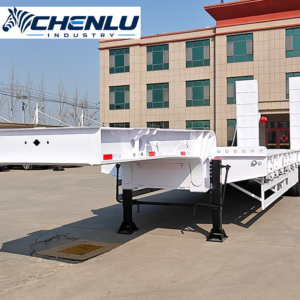
3 Axle Lowbed Semi Trailer
3 axle 60ton Lowbed semi trailer for heavy equipment transportation
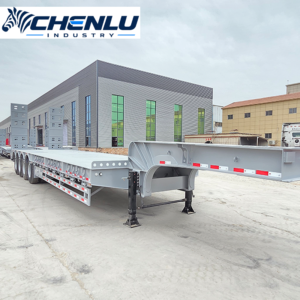
4 Axle Lowboy Trailer
4 Axle Lowbed Trailer features a rear ramp design, specifically designed for transporting large-tonnage construction machinery and heavy cargo.
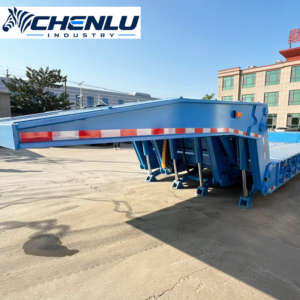
Hydraulic Lowbed Trailer
This hydraulically detachable gooseneck low bed semi trailer is specifically designed for transporting large, heavy equipment and construction machinery. Applicable Scenarios:Widely used for the long-distance transportation of construction machinery such as excavators, bulldozers, and loaders, as well as non-detachable heavy cargo such as large transformers and heavy structural components.
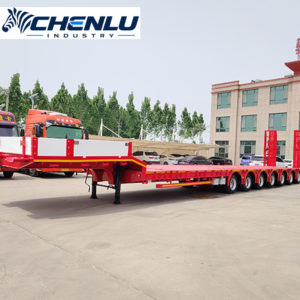
Multi Axle Lowbed Trailer
Multi Axle Lowbed Trailer features a multi axle arrangement and a low chassis design, making it ideal for long-distance transport of overweight and oversized cargo weighing hundreds of tons.
CHAPTER 1 — Lowbed Trailer Guide: Types, Structure, Applications & Buying Considerations
1-1. What Is a Lowbed Trailer and What Is It Used For?
A lowbed trailer, also known as a low loader or lowboy trailer, is a heavy-duty semi trailer designed to transport construction machinery, industrial equipment, mining machinery, agricultural machines, and other heavy or oversized cargo.
Unlike a conventional flatbed trailer, a lowbed trailer has a lowered cargo deck. The deck is positioned closer to the road surface, reducing the overall height of the loaded vehicle.
This design makes lowbed trailers particularly suitable for transporting equipment such as:
- Excavators
- Bulldozers
- Wheel loaders
- Cranes and lifting equipment
- Mining machinery
- Road construction equipment
- Agricultural machinery
- Rail-related equipment
- Industrial machinery
- Other oversized or heavy cargo
For long-distance transportation, the low deck provides a practical balance between payload capacity, cargo dimensions, road clearance, and overall vehicle height.
The exact trailer configuration depends on the equipment being transported, its weight and dimensions, the tractor specifications, and the applicable road regulations.
1-2. Why Is the Deck of a Lowbed Trailer Designed So Low?
The low deck is one of the most important characteristics of a lowbed trailer.
When heavy machinery is loaded onto a conventional flatbed trailer, the height of the trailer deck is added to the height of the cargo. For tall construction equipment, this can increase the overall transport height and create problems when passing under bridges, overhead structures, or other height restrictions.
A lowbed trailer reduces this problem by lowering the cargo platform.
The lower deck also helps reduce the center of gravity of the loaded combination. This can improve stability when transporting heavy equipment over long distances, especially when the cargo has a high center of gravity.
A typical lowbed structure uses a lowered or concave cargo platform between the front gooseneck section and the rear axle area. The exact deck height depends on the frame design, suspension, axle configuration, tire size, and required payload.
1-3. Lowbed Trailer Structure: Main Components Explained
A lowbed trailer consists of several structural and running components that work together to support and transport heavy cargo.
- Main Frame: The main frame carries the majority of the trailer’s structural load. Heavy-duty lowbed trailers commonly use high-strength structural steel such as Q460C or T700 for the main beams.
- Cargo Deck: The lowered cargo deck provides the loading surface for heavy machinery. Depending on the application, the deck can use steel plate, anti-slip patterned steel, rubber, wood, or other suitable materials.
- Gooseneck: The gooseneck connects the trailer to the tractor through the kingpin and fifth wheel. Different gooseneck designs can be used according to tractor height, cargo requirements, and loading method.
- Axles and Suspension: Axles transfer the trailer load to the road through the wheels and tires. Mechanical leaf spring suspension and air suspension are common options for lowbed trailers.
- Landing Gear: Landing gear supports the front of the trailer when it is disconnected from the tractor. Heavy-duty configurations normally require landing gear suitable for the trailer’s operating weight.
- Loading Ramps: Rear ramps allow construction equipment to drive directly onto the trailer deck. Mechanical and hydraulic ramp systems can be selected according to equipment weight and loading requirements.
- Tie-Down and Securing Points: Heavy-duty lashing points help secure equipment during transportation and reduce unwanted movement caused by braking, acceleration, turning, or uneven road surfaces.
1-4. Types of Lowbed Trailers and Their Applications
Lowbed trailers can be configured in different ways depending on payload, equipment dimensions, loading requirements, and road conditions.
- 2-Axle and 3-Axle Lowbed Trailers: These configurations are commonly used for medium and heavy construction equipment. A three-axle configuration is suitable for many standard heavy equipment transportation applications.
- 4-Axle Lowbed Trailers: Four-axle configurations provide additional load distribution and are suitable for heavier machinery and higher payload requirements.
- Multi-Axle Lowbed Trailers: For extremely heavy equipment, multiple axles can be used to distribute the load across a larger number of wheels. Hydraulic multi-axle systems and modular configurations can be used for particularly heavy or oversized transportation projects.
- RGN and Detachable Gooseneck Lowbed Trailers: A detachable gooseneck, commonly referred to as an RGN configuration, allows the front connection section to be removed or lowered for easier equipment loading. This design is particularly useful when transporting self-propelled construction machinery.
- Extendable Lowbed Trailers: Extendable lowbeds are designed for long cargo. The deck can be extended to accommodate equipment or structures that exceed the standard deck length. Depending on the configuration, an extendable lowbed can provide a deck length of approximately 25 meters or more for suitable applications.
The appropriate configuration should always be determined according to cargo dimensions, payload requirements, tractor specifications, and local transportation regulations.
1-5. What Equipment Can a Lowbed Trailer Transport?
Lowbed trailers are primarily designed for heavy equipment that cannot be efficiently transported on conventional cargo trailers.
Lowbed trailers are widely used in construction, mining, infrastructure, agriculture, and industrial transportation.
Common cargo includes:
- Excavators
- Bulldozers
- Wheel loaders
- Road rollers
- Cranes
- Drilling machines
- Mining equipment
- Agricultural machinery
- Road construction equipment
- Industrial machinery
- Long or oversized equipment
The trailer should be selected according to the actual cargo rather than weight alone.
Cargo length, width, height, wheel or track configuration, loading method, center of gravity, and available securing points can all influence the final trailer design.
1-6. How Is Lowbed Trailer Load Capacity Determined?
The load capacity of a lowbed trailer is determined by the complete structural and running system rather than by one component.
Important factors include:
- Main beam strength and dimensions
- Cross-member arrangement
- Axle quantity and axle rating
- Suspension configuration
- Tire load index
- Wheel and rim specifications
- Kingpin and gooseneck structure
- Deck design
- Axle spacing
- Applicable road regulations
Standard lowbed configurations can cover a wide range of payload requirements, from approximately 30 tons to well over 100 tons. Heavy-duty and multi-axle designs can be engineered for higher loads when required.
For example, a heavy-duty main beam may use a depth of approximately 500 mm, while the side beam and other structural members are selected according to the required load and operating conditions.
The rated capacity of the trailer should always be considered together with the tractor, axle load limits, road regulations, and actual cargo weight.
1-7. Lowbed Trailer Dimensions: Length, Width, Height and Ground Clearance
Lowbed trailer dimensions are not fixed because different cargo requires different configurations.
The main dimensions normally considered include:
- Overall trailer length
- Cargo deck length
- Deck width
- Deck height
- Ground clearance
- Gooseneck dimensions
- Ramp length
- Axle spacing
For example, a typical three-axle lowbed configuration may have an overall length of approximately 13,000 mm and a deck width of around 3,000 mm. Side extensions of approximately 250 mm can be used when additional loading width is required.
Depending on the design, deck height may be approximately 900–1,250 mm, while tire specifications can include 12R22.5 or other configurations suitable for the required payload.
These figures are examples rather than universal standards. Actual dimensions should be designed around the equipment being transported and the regulations of the destination market.
1-8. How Do Lowbed Trailers Load Heavy Equipment?
Lowbed trailers normally use ramps to allow wheeled or tracked machinery to move from the ground onto the cargo deck.
The basic loading process includes:
- Position the trailer on stable and suitable ground.
- Connect the tractor securely to the trailer.
- Deploy and inspect the loading ramps.
- Align the equipment with the trailer centerline.
- Drive or move the equipment slowly onto the deck.
- Position the equipment according to the recommended load distribution.
- Stop the equipment and secure it with suitable restraints.
Mechanical ramps are simple and reliable for many standard applications.
Hydraulic ramps provide easier operation for heavier equipment and can reduce manual handling during loading and unloading.
For specialized machinery, the loading system can be customized according to equipment dimensions, wheel or track configuration, and operating weight.
1-9. How Do You Secure Heavy Equipment on a Lowbed Trailer?
Correct cargo securing is essential when transporting heavy machinery.
The equipment should be positioned so that the load is distributed appropriately across the trailer axles without exceeding the permitted axle loads.
Common securing methods include:
- Heavy-duty chains
- Tie-down straps
- Wheel chocks
- Lashing points
- Mechanical locks
- Anti-slip deck materials
An anti-slip cargo surface can help reduce movement between the equipment and trailer deck.
The trailer can also be equipped with reinforced lashing points at suitable positions around the cargo area.
For tracked machinery and equipment with a high center of gravity, cargo positioning is especially important. The equipment should be centered as much as practical while maintaining the required axle-load distribution.
1-10. Lowbed Trailer vs. Flatbed, Step Deck and RGN Trailers
Different trailer types are designed for different transportation requirements.
- Lowbed vs. Flatbed Trailer: A flatbed trailer provides a simple and versatile loading platform, making it suitable for general cargo, containers, steel products, machinery, and other goods. A lowbed trailer has a significantly lower cargo deck and is better suited to tall and heavy equipment where overall transport height is an important consideration.
- Lowbed vs. Step Deck Trailer: A step deck trailer has two deck levels, providing a lower cargo area than a standard flatbed while retaining a relatively conventional trailer structure. A lowbed generally provides a lower loading platform and is more commonly used for heavy construction machinery and oversized equipment.
- Lowbed vs. RGN Trailer: An RGN trailer uses a detachable gooseneck, making it easier to load self-propelled equipment directly from the ground. This configuration is particularly useful for excavators, bulldozers, and similar machinery that can be driven onto the trailer.
The best choice depends on cargo dimensions, weight, loading method, transportation distance, and local road requirements.
1-11. How to Choose the Right Lowbed Trailer for Your Cargo
Choosing a lowbed trailer should start with the cargo rather than the trailer itself.
Before selecting a configuration, determine:
- Cargo Weight: Know the actual operating weight of the equipment, including attachments and accessories that will remain on the machine during transportation.
- Cargo Dimensions: Measure the overall length, width, and height of the equipment.
- Loading Method: Determine whether the equipment can drive onto the trailer or whether a crane or other lifting equipment will be required.
- Road Regulations: Axle limits, maximum vehicle dimensions, permitted overall height, and other transportation regulations vary between markets.
- Required Deck Design: Consider deck length, width, height, surface material, side extensions, and lashing points.
- Suspension and Axle Configuration: The axle and suspension system should match the expected payload and operating environment.
- Ramp Requirements: Mechanical or hydraulic ramps can be selected depending on equipment weight, loading frequency, and operating convenience.
A properly matched trailer provides a better balance between payload capability, road compliance, loading efficiency, and long-term operating cost.
1-12. What Affects Lowbed Trailer Cost and Price?
The price of a lowbed trailer depends on its structure, specifications, components, and level of customization.
Major cost factors include:
- Trailer payload rating
- Steel grade and total steel usage
- Number of axles
- Axle brand and specifications
- Suspension type
- Tire and wheel configuration
- Brake system
- Ramp design
- Hydraulic equipment
- Deck dimensions
- Extendable or detachable structures
- Surface treatment and painting
- Custom safety or regulatory requirements
A standard three-axle lowbed trailer will normally have a different price from a 4-axle, 80-ton trailer or a multi-axle heavy-duty configuration.
For this reason, comparing lowbed trailer prices only by the number of axles can be misleading. The structural design, component quality, payload requirement, and customization level should all be considered.
1-13. Lowbed Trailer Maintenance: What Should Buyers Check?
Regular inspection helps maintain the safety and service life of a lowbed trailer.
- Frame and Welds: Check the main beams, cross members, gooseneck, suspension mounting areas, and welded joints for cracks, deformation, or abnormal wear.
- Axles and Suspension: Inspect axle components, suspension parts, bushings, U-bolts, air suspension components, and other load-bearing connections.
- Tires and Wheels: Check tire pressure, tread condition, load rating, wheel condition, and abnormal tire wear.
- Braking System: Inspect brake chambers, air lines, valves, brake components, and the overall braking response.
- Ramps and Hydraulic System: For hydraulic ramps, inspect cylinders, hoses, fittings, and hydraulic connections for leakage or damage.
- Kingpin and Landing Gear: The kingpin, fifth-wheel connection area, landing gear, and related components should be checked regularly because they carry important connection and support loads.
- Cargo Securing Equipment: Lashing points, chains, locks, and other securing equipment should be inspected before transporting heavy machinery.
A preventive maintenance routine is particularly important for trailers operating under high payloads, frequent loading cycles, rough road conditions, or long-distance transportation.
CHAPTER 2 — CHENLU INDUSTRY Lowbed Trailer Manufacturing & Custom Solutions
2-1. CHENLU INDUSTRY Lowbed Trailer Manufacturing Overview
CHENLU INDUSTRY manufactures lowbed semi trailers for heavy equipment transportation, construction projects, mining operations, industrial logistics, and oversized cargo applications.
Each lowbed trailer is designed around the required payload, cargo dimensions, tractor specifications, axle configuration, loading method, and destination-market road regulations.
The manufacturing process combines structural engineering, high-strength steel fabrication, axle and suspension selection, loading-system integration, surface treatment, and final inspection to create a trailer suited to its intended operating conditions.
Standard lowbed configurations can be adapted into 2-axle, 3-axle, 4-axle, multi-axle, detachable gooseneck, and extendable designs depending on the transportation requirement.
2-2. How CHENLU Designs a Lowbed Trailer for Different Loads
CHENLU INDUSTRY starts the lowbed trailer design process with the actual cargo and operating requirements.
The engineering team considers cargo weight, overall dimensions, center of gravity, loading method, tractor specifications, axle-load limits, and road regulations before determining the trailer structure.
For heavier machinery, the frame can be reinforced through appropriate main beam dimensions, cross-member arrangement, axle configuration, and suspension capacity.
For long or oversized cargo, the design can incorporate side extensions or an extendable deck. Depending on the application, extendable lowbed trailers can provide a working deck length of approximately 25 meters or more.
This approach allows the trailer to be configured for the actual transportation task rather than relying on a one-size-fits-all structure.
2-3. Steel Selection for Lowbed Trailer Frames
The main frame is one of the most important load-bearing structures of a lowbed trailer. CHENLU INDUSTRY uses high-strength structural steels such as Q460C and T700 for suitable heavy-duty applications.
The steel grade, plate thickness, beam dimensions, and reinforcement structure are selected according to the required payload and operating conditions.
A heavy-duty configuration may use a main beam depth of approximately 500 mm, while side beams and other structural members are engineered to work together with the main frame.
High-strength steel can help achieve the required structural strength while controlling unnecessary trailer weight. The final material specification is determined according to the trailer’s intended payload, road conditions, and customer requirements.
2-4. Axles, Suspension, Tires and Braking Configuration
The running gear of a lowbed trailer must match the structural capacity of the trailer and the expected operating load.
CHENLU INDUSTRY can configure lowbed trailers with mechanical leaf spring suspension or air suspension depending on the application.
Axle options can include established heavy-duty axle systems such as FUWA or BPW, while tire and wheel specifications are selected according to axle load, payload requirements, road conditions, and local market preferences.
Braking and safety equipment can also be configured according to the intended operating environment. Depending on the project, options may include ABS or EBS systems, air brake components, waterproof LED lighting, and suitable brake chambers.
The complete axle, suspension, tire, and braking system should be considered as one operating package rather than selected independently.
2-5. How to Configure Axles for a Lowbed Trailer
Axle configuration is directly related to payload distribution, road regulations, and the intended transportation route.
A standard lowbed trailer may use 2, 3, or 4 axles for common heavy equipment transportation. Higher payload requirements can require additional axle lines or specialized multi-axle configurations.
The engineering design considers axle rating, axle spacing, suspension capacity, tire load index, overall trailer weight, and the permitted axle loads of the destination market.
Multi-axle lowbed trailers can distribute heavy cargo across more axle lines, helping the complete vehicle remain within applicable road load limits when transporting extremely heavy equipment.
The final axle configuration should therefore be determined by both the cargo weight and the road conditions under which the trailer will operate.
2-6. Lowbed Trailer Deck and Loading System Customization
The cargo deck and loading system can be customized according to the type of equipment being transported.
Deck width, deck length, deck height, side extensions, surface material, lashing points, and ramp configuration can all be adjusted to meet different loading requirements.
Mechanical spring ramps are a practical choice for many standard applications because of their simple structure and easy maintenance.
Hydraulic loading ramps provide easier operation for heavier equipment. The hydraulic system can control the lowering and folding of the ramps, reducing manual effort during loading and unloading.
For equipment that requires a particularly low loading height, specialized gooseneck or detachable gooseneck designs can also be considered.
2-7. Custom Lowbed Trailers for Different Equipment
Different types of heavy equipment require different trailer configurations.
- Excavators and Bulldozers: These machines normally require a strong low deck, suitable ramps, and sufficient lashing points for secure transportation.
- Mining Equipment: Heavy mining machinery may require reinforced frame structures, additional axle lines, and higher payload configurations.
- Long Equipment: Long machinery and structural components can be transported using extendable lowbed configurations.
- Self-Propelled Machinery: RGN or detachable gooseneck designs can make it easier for self-propelled equipment to move directly onto the loading deck.
- Oversized Equipment: Wider decks, side extensions, special securing points, and customized loading systems can be integrated when required.
By matching the trailer structure to the actual equipment, CHENLU INDUSTRY can develop a lowbed solution that balances payload, loading efficiency, road compliance, and operating requirements.
2-8. CHENLU INDUSTRY Lowbed Trailer Production Process
Lowbed trailer production begins with steel preparation and structural fabrication before moving through frame assembly, welding, surface treatment, component installation, and final inspection.
CNC plasma cutting can be used to accurately process steel web plates and structural components according to the engineering drawings.
Main beams are assembled and welded to form the primary load-bearing structure. Cross members are integrated through prepared web openings to strengthen the frame and improve overall structural rigidity.
After the main frame is assembled and welded, the trailer can undergo shot blasting to remove surface scale and prepare the steel for coating.
Primer and two-component polyurethane paint can then be applied to provide a durable protective surface suitable for transportation and outdoor operation.
Axles, suspension, braking components, landing gear, ramps, lights, and other systems are installed after the main structural work is completed.
2-9. How CHENLU Inspects Lowbed Trailers Before Delivery
Before delivery, a lowbed trailer is inspected to confirm that the structural, running, loading, and safety systems meet the required configuration.
Inspection can include the main frame, welds, cross members, axle installation, suspension system, brake components, tires, landing gear, ramps, lighting, and cargo securing points.
For heavy-duty configurations, structural performance and load distribution are particularly important. Main beam deflection, weld integrity, suspension balance, and the condition of load-bearing connections should be checked before the trailer leaves the factory.
The final inspection also confirms that the delivered trailer matches the agreed technical configuration and customer requirements.
2-10. Lowbed Trailer Surface Protection, Packaging and Shipping
Proper surface protection and transportation preparation are important when shipping lowbed trailers internationally.
After painting and final inspection, exposed surfaces and important components can receive additional protection against moisture, salt spray, and handling conditions during ocean transportation.
Waterproof covering and suitable protective materials can be used to reduce exposure to rain and humidity during transit.
Depending on trailer dimensions, port conditions, and destination requirements, lowbed trailers can be transported by bulk vessel, Ro-Ro ship, or container flat rack.
The shipping method is selected according to the final trailer dimensions and the most practical transportation route to the destination port.
2-11. CHENLU Lowbed Trailer Configurations and Custom Solutions
CHENLU INDUSTRY provides different lowbed trailer configurations for customers with different payload and transportation requirements.
- Standard 2-Axle and 3-Axle Lowbed Trailers for common heavy equipment transportation.
- 4-Axle Heavy-Duty Lowbed Trailers for higher payload requirements.
- Multi-Axle Lowbed Trailers for extremely heavy machinery and specialized transportation.
- RGN and Detachable Gooseneck Trailers for equipment that needs direct ground-level loading.
- Extendable Lowbed Trailers for long machinery and oversized cargo.
- Custom Lowbed Trailers with modified deck dimensions, ramps, axle systems, suspension, side extensions, and securing equipment.
The final configuration can be developed around the customer’s cargo, tractor, road regulations, operating environment, and transportation plan.
2-12. What Information Do You Need to Order a Custom Lowbed Trailer?
To design a suitable custom lowbed trailer, the following information is helpful:
- Type of equipment to be transported
- Equipment operating weight
- Overall equipment length
- Overall equipment width
- Overall equipment height
- Required payload capacity
- Preferred trailer length and width
- Tractor specifications
- Number of axles required
- Mechanical or air suspension preference
- Mechanical or hydraulic ramp requirements
- Destination country and applicable road regulations
- Special requirements for containers, side extensions, or oversized cargo
Equipment drawings, photographs, or detailed dimensions can also help the engineering team determine the most suitable deck dimensions, axle configuration, loading system, and securing arrangement.
With the correct cargo information, CHENLU INDUSTRY can develop a lowbed trailer configuration that is better matched to the actual transportation task.
2-13. Lowbed Trailer FAQ
What is a lowbed trailer used for?
A lowbed trailer is mainly used to transport heavy, tall, or oversized equipment such as excavators, bulldozers, cranes, mining machinery, and road construction equipment.
How many axles does a lowbed trailer have?
Lowbed trailers can use 2, 3, 4, or multiple axles depending on the required payload, axle-load limits, cargo weight, and transportation regulations.
How much weight can a lowbed trailer carry?
Payload capacity can range from approximately 30 tons to more than 150 tons for specialized heavy-duty configurations. The actual capacity depends on frame design, axle ratings, suspension, tire capacity, axle spacing, and applicable road regulations.
What is the difference between a lowbed and an RGN trailer?
A conventional lowbed trailer normally has a fixed front gooseneck, while an RGN trailer uses a detachable gooseneck that can provide a lower and more convenient loading method for self-propelled equipment.
Can a lowbed trailer be customized?
Yes. Lowbed trailers can be customized in terms of deck length, deck width, deck height, axle quantity, suspension, ramps, side extensions, gooseneck design, lashing points, and other components according to the cargo and transportation requirements.
How long can an extendable lowbed trailer be?
Depending on the configuration, an extendable lowbed trailer can provide a working deck length of approximately 25 meters or more for suitable long-cargo applications.
How should I choose a lowbed trailer manufacturer?
Consider the manufacturer’s engineering capability, structural design, component selection, customization experience, production process, quality inspection, and international shipping experience. The trailer should be designed around the actual cargo and destination-market requirements rather than based only on a standard specification.
Send Inquiry
Tell us the trailer model, quantity, destination port and your main transport cargo. Our sales team will reply with a suitable configuration.