

Flatbed Trailer
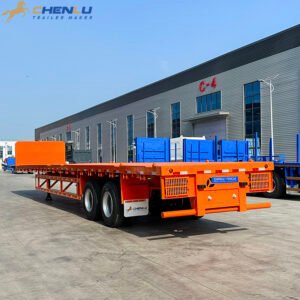
2 Axle Flatbed Semi Trailer
2 axle flatbed semi trailer uses high-strength cold-rolled steel main beams. The dual axles are rationally distributed, ensuring balanced and stable load-bearing capacity. The flatbed structure design is simple.
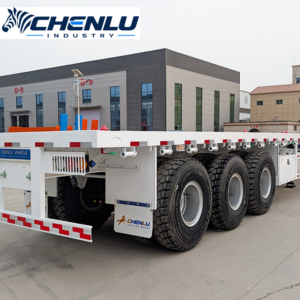
3 Axle Flatbed Semi Trailer
White 3 Axle Flatbed Trailer is the most classic and versatile model for heavy-duty transport, with optional 13t/16t axles, and features lightweight construction and high strength.
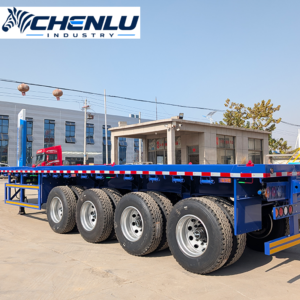
4 Axle Flat Bed Trailer
4 Axle Flatbed Trailer features a four axle heavy duty layout, balancing high load capacity with general loading flexibility. Compared to traditional three axle flatbed trailers, it has a higher load limit and can reliably carry 60-80 tons.
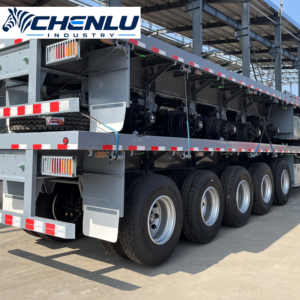
5 Axle Container Semi Trailer
5 Axle Flatbed Trailer features a baffle less platform and a multi-axle design, significantly increasing its load capacity to easily carry 70-90 tons. It is designed for efficient transportation of containers, large equipment, and bulk cargo.
CHAPTER 1 — Flatbed Trailer Guide: Types, Uses, Structure & Buying Considerations
1-1. What Is a Flatbed Trailer and What Is It Used For?
A flatbed trailer is a semi-trailer with an open, level deck and no fixed side walls or roof. This structure makes it suitable for cargo that is too large, wide, long, tall, or irregularly shaped for an enclosed trailer.
Flatbed trailers are widely used for transporting containers, steel products, construction materials, machinery, timber, pipes, structural components, and other general or oversized cargo. Because the deck is open from all sides, cargo can often be loaded using cranes, forklifts, container handling equipment, or other lifting systems.
For container transportation, flatbed trailers are commonly configured with container locks positioned to match standard container corner castings. This allows the same trailer platform to support common container transportation requirements while remaining useful for general cargo operations.
1-2. How Does a Flatbed Trailer Work?
A flatbed trailer connects to a tractor through the kingpin and fifth-wheel coupling system. The trailer frame supports the cargo deck, while the axle and suspension system carries the load and transfers road forces through the tires.
During operation, the tractor provides the pulling force while the trailer follows through the fifth-wheel connection. Air lines connect the trailer braking system to the tractor, and electrical connections provide power for lighting and other required electrical functions.
The open deck allows cargo to be loaded from the rear, side, or top depending on the cargo type and available equipment. Once loaded, the cargo must be properly positioned and secured according to its weight, dimensions, center of gravity, and transportation requirements.
1-3. What Can a Flatbed Trailer Transport?
Flatbed trailers are designed for a wide range of cargo because the open deck removes many of the dimensional restrictions associated with enclosed trailers.
- 20ft and 40ft shipping containers
- Steel coils, steel plates and structural steel
- Construction materials
- Timber and wood products
- Pipes and long cargo
- Construction machinery and industrial equipment
- Large components and fabricated structures
- General bulk cargo suitable for an open platform
The appropriate trailer configuration depends on cargo dimensions, cargo weight, loading method, road regulations, axle limits, and the requirements of the tractor used for transportation.
1-4. 20ft vs. 40ft Flatbed Trailer: What Is the Difference?
The main difference between 20ft and 40ft container transportation is the deck and container-lock configuration required for the container length being transported.
A flatbed trailer designed for 20ft and 40ft containers may use multiple container-lock positions so that the same trailer can accommodate different container arrangements. This provides greater flexibility for fleets handling different container sizes.
When selecting a flatbed trailer for container transportation, buyers should consider not only container length but also axle configuration, legal load limits, deck dimensions, container-lock positions, tractor compatibility, and local transportation regulations.
1-5. Common Types of Flatbed Trailers
Flatbed trailers can be configured in different ways depending on cargo, loading requirements, axle limits, and transportation conditions.
- 2-axle flatbed trailer: A compact configuration for suitable cargo and regional transportation requirements.
- 3-axle flatbed trailer: A common configuration for general cargo and container transportation.
- 4-axle flatbed trailer: Designed for applications requiring additional axle capacity and load distribution.
- Extendable flatbed trailer: Used when longer cargo requires additional deck length.
- Interlink or special flatbed trailer: Configured for specific cargo-handling or transportation requirements.
The final configuration should be selected according to the actual cargo and the legal transportation limits of the operating region.
1-6. Flatbed Trailer Dimensions: Length, Width and Deck Height
Flatbed trailer dimensions vary according to the cargo being transported, container requirements, axle configuration, and regional road regulations.
Common flatbed trailer designs are built around container transportation requirements such as 20ft and 40ft containers. Other configurations may use longer platforms for general cargo or special transportation applications.
Typical design considerations include overall trailer length, deck width, deck height, axle spacing, kingpin position, and ground clearance. For example, a representative 3-axle flatbed configuration may use a deck dimension of approximately 12,500 × 2,500 mm, although actual dimensions should always be confirmed according to the required configuration.
1-7. How Much Weight Can a Flatbed Trailer Carry?
Flatbed trailer payload capacity depends on the axle ratings, number of axles, suspension system, frame structure, deck design, tire capacity, tractor combination, and applicable road regulations.
Different flatbed configurations can be designed for different operating requirements. A 3-axle flatbed may be suitable for many general cargo and container applications, while higher-axle configurations can be considered when additional load distribution is required.
Payload should not be determined by trailer structure alone. The legal gross vehicle weight, axle load limits, road conditions, and tractor-trailer combination must also be considered when determining the usable payload.
1-8. How Do Container Locks Secure a Container on a Flatbed Trailer?
Container locks, commonly known as twist locks, are installed at designated positions on a container flatbed trailer. They engage with the corner castings located at the bottom corners of an ISO container.
When properly engaged, the locks help keep the container positioned on the trailer deck during transportation. A flatbed designed for container use may include multiple locking positions to support different container arrangements.
Before transportation, all container locks should be fully engaged and checked according to the trailer manufacturer’s operating instructions and the applicable transportation requirements.
1-9. Flatbed Trailer Suspension: Mechanical, Bogie and Air Suspension
Suspension is an important part of a flatbed trailer because it affects load distribution, road performance, maintenance requirements, and operating conditions.
Mechanical leaf spring suspension is widely used because of its straightforward structure and suitability for many general cargo applications.
Bogie suspension groups multiple axles into a common suspension arrangement and can be used where a particular axle-load distribution is required.
Air suspension uses air springs and related components to support the trailer. It may be selected for applications where suspension characteristics, load distribution, or operating requirements make it appropriate.
The best suspension configuration depends on cargo, road conditions, axle requirements, maintenance preferences, and local regulations.
1-10. Flatbed Trailer Main Components Explained
A flatbed trailer consists of several major systems that work together to carry and control the cargo.
- Main frame and beams: Support the deck and transfer cargo loads through the trailer structure.
- Cross members: Connect and reinforce the frame structure beneath the deck.
- Axles: Carry the trailer load and transfer forces to the wheels.
- Suspension: Supports the axles and manages road movement and load distribution.
- Kingpin: Connects the trailer to the tractor fifth wheel.
- Landing gear: Supports the front of the trailer when it is disconnected from the tractor.
- Braking system: Provides controlled braking through air brake components and related systems.
- Container locks: Secure compatible shipping containers to the deck.
- Lighting and electrical system: Provides required trailer lighting and electrical connections.
1-11. How to Load and Secure Cargo on a Flatbed Trailer
Loading a flatbed trailer starts with selecting a suitable loading method. Depending on the cargo, loading may be performed using forklifts, cranes, container handling equipment, or other specialized machinery.
After loading, the cargo should be positioned with consideration for the trailer’s load distribution and the cargo’s center of gravity. Excessive concentration of weight in one area can affect axle loading and trailer stability.
Cargo should then be secured using suitable chains, straps, binders, blocking, or other approved securing equipment according to the cargo type and applicable regulations.
- Check the trailer deck and securing equipment before loading.
- Position the cargo according to the required load distribution.
- Check the cargo center of gravity and axle loading.
- Use suitable restraints and securing points.
- Inspect the cargo and restraints before departure.
1-12. Flatbed Trailer vs. Other Semi-Trailer Types
Flatbed trailers are different from other semi-trailer designs mainly because of their open and unobstructed deck.
| Trailer Type | Main Characteristic | Typical Application |
|---|---|---|
| Flatbed Trailer | Open level deck | Containers, steel, machinery and general cargo |
| Lowbed Trailer | Low loading deck | Heavy machinery and high equipment |
| Dump Trailer | Hydraulically operated tipping body | Bulk materials such as sand, gravel and aggregate |
| Side Wall Trailer | Deck with fixed or removable side walls | General cargo requiring additional side support |
The right trailer depends on the cargo dimensions, loading method, cargo characteristics, legal requirements, and operating conditions.
1-13. How to Choose the Right Flatbed Trailer
Choosing a flatbed trailer should start with the cargo rather than the trailer model. Buyers should define the cargo type, average weight, maximum dimensions, loading method, transportation distance, and operating environment.
Important configuration factors include:
- Trailer length and deck width
- Number of axles and axle capacity
- Mechanical or air suspension
- Tire size and load rating
- Container-lock arrangement
- Brake and electrical configuration
- Kingpin and landing gear configuration
- Cargo securing points
- Local road and weight regulations
A suitable configuration balances payload requirements, operating conditions, maintenance considerations, and transportation regulations rather than simply choosing the highest-rated trailer.
CHAPTER 2 — CHENLU INDUSTRY Flatbed Trailer Manufacturing & Custom Solutions
2-1. CHENLU INDUSTRY Flatbed Trailer Manufacturing Overview
CHENLU INDUSTRY develops flatbed trailers for container transportation, general cargo, industrial materials, machinery, and other open-deck transportation requirements.
Flatbed trailer manufacturing involves more than assembling axles and a steel platform. The frame, cross members, suspension, braking system, deck configuration, container locks, landing gear, and other components need to work together as one transportation system.
Different markets and cargo applications may require different axle arrangements, dimensions, suspension systems, braking configurations, and deck designs. CHENLU can configure the trailer according to the intended operating requirements.
2-2. How CHENLU Designs Flatbed Trailers for Different Cargo
Flatbed trailer design starts with understanding the cargo and transportation conditions. Container transportation, steel products, machinery, long materials, and general cargo can require different deck and frame configurations.
During the design stage, factors such as cargo dimensions, payload, axle arrangement, tractor specifications, loading method, road regulations, and operating environment are considered.
For custom projects, technical drawings can be developed before production so that major dimensions and component configurations can be reviewed before manufacturing begins.
2-3. Flatbed Trailer Main Beams and Steel Selection
The main beams are among the most important structural components of a flatbed trailer. They support the deck structure and transfer cargo loads through the chassis toward the suspension and axles.
Steel selection should consider the required structural strength, toughness, trailer weight, manufacturing process, and intended application.
High-strength steels such as T700 can be considered for applications where structural requirements and weight control are important. Other steel grades may be selected according to the required design and manufacturing conditions.
The final steel specification should be based on the actual trailer design rather than selecting a material solely by its nominal strength value.
2-4. Flatbed Trailer Frame and Cross-Member Design
The trailer frame combines the main beams with cross members and other structural components to create the load-bearing platform.
Cross members help connect the main beams and support the deck. Their arrangement is determined according to the deck structure, cargo requirements, frame dimensions, and expected loading conditions.
During production, CNC cutting and controlled welding processes can be used to maintain dimensional consistency between structural components.
2-5. Axles, Suspension, Tires and Braking Systems
Axles, suspension, tires, and brakes form the running system of the flatbed trailer. Their configuration must match the trailer’s intended payload and operating conditions.
Depending on the project, flatbed trailers may use mechanical suspension or air suspension and can be equipped with different axle and tire configurations.
Brake systems can include air brake components and, where required by the selected configuration or market, ABS or EBS-related systems. Brake valves, air chambers, lines, and electrical connections must be correctly matched during assembly.
2-6. Container Lock and Cargo Deck Configuration
For container transportation, container locks are positioned on the deck according to the required container configuration. A suitable locking arrangement allows compatible containers to be properly located on the trailer.
The deck can also be configured for general cargo applications where container locks are not the primary requirement.
Depending on the project, cargo securing points and other deck features can be incorporated to support the intended transportation method.
2-7. Flatbed Trailer Dimensions and Customization Options
Flatbed trailer dimensions can be customized according to cargo, container requirements, axle configuration, tractor specifications, and local transportation regulations.
Common design parameters include overall length, deck width, deck height, axle spacing, kingpin position, and container-lock positions.
Longer or extendable flatbed configurations can be considered for cargo that exceeds the usable length of a standard platform.
2-8. Custom Flatbed Trailers for Different Applications
CHENLU flatbed trailers can be configured for different transportation requirements rather than relying on one universal specification.
- Container transportation: Configured with suitable container-lock positions for compatible container sizes.
- Steel and metal products: Designed with appropriate deck and load-distribution considerations.
- Long cargo: May require extended or extendable deck configurations.
- Machinery and industrial equipment: Configured according to equipment dimensions, weight, and loading method.
- General cargo: Designed around the cargo dimensions and securing requirements of the fleet.
2-9. CHENLU INDUSTRY Flatbed Trailer Production Process
Flatbed trailer production follows a sequence from technical design through structural fabrication, surface treatment, component installation, inspection, and final preparation.
- Confirm trailer specifications and technical drawings.
- Prepare and cut structural steel components.
- Assemble and weld the main frame and cross members.
- Install axles, suspension and related running components.
- Complete surface preparation and corrosion protection.
- Apply primer and finishing paint.
- Install tires, braking components, lights, landing gear and other accessories.
- Complete final inspection and prepare the trailer for delivery.
2-10. How CHENLU Inspects Flatbed Trailers Before Delivery
Before delivery, the completed trailer should be checked against the approved configuration and technical requirements.
Inspection can include the trailer dimensions, welding quality, frame condition, axle and suspension installation, brake system, electrical system, tires, landing gear, container locks, lighting, and other specified components.
The purpose of final inspection is to confirm that the finished trailer matches the required configuration and is prepared for transportation and delivery.
2-11. Flatbed Trailer Painting, Protection and Shipping
After structural fabrication, the trailer surface can undergo derusting and surface preparation before primer and finishing paint are applied.
Protective treatment is important during transportation and storage. Depending on the shipping method, completed trailers may be prepared with protective materials such as anti-corrosion wax and waterproof coverings.
Flatbed trailers can be shipped through methods such as bulk vessel, Ro-Ro, or suitable container and flat-rack arrangements depending on the trailer dimensions and shipping requirements.
2-12. CHENLU Flatbed Trailer Configurations and Custom Solutions
CHENLU can configure flatbed trailers according to different cargo and market requirements. The configuration may include axle number, suspension type, tire specification, braking system, deck dimensions, container locks, landing gear, cargo securing points, and other required components.
For projects with specific transportation requirements, the trailer can be developed around the customer’s cargo, tractor specifications, operating region, and applicable regulations.
This approach allows the final trailer specification to be based on actual transportation requirements rather than relying on a standard configuration that may not suit every application.
2-13. What Information Do You Need to Order a Flatbed Trailer?
To develop a suitable flatbed trailer configuration, customers should provide as much information as possible about the intended application.
- Type of cargo to be transported
- Maximum cargo weight
- Cargo length, width and height
- 20ft, 40ft or other container requirements
- Required trailer length and width
- Preferred axle configuration
- Mechanical or air suspension requirements
- Tractor specifications and fifth-wheel requirements
- Operating country or region
- Applicable road and weight regulations
- Special loading or cargo-securing requirements
With this information, CHENLU INDUSTRY can evaluate the required trailer structure and component configuration and develop a suitable flatbed trailer solution for the intended application.
Send Inquiry
Tell us the trailer model, quantity, destination port and your main transport cargo. Our sales team will reply with a suitable configuration.