

Fence Semi Trailer
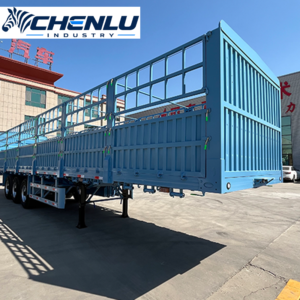
3 Axle Fence Trailer
3 Axle Fence Trailer features a combination structure of a lower low fence panel and an upper fence, effectively increasing loading height and internal volume. Both the fence and the fence panel can be flexibly disassembled and opened.
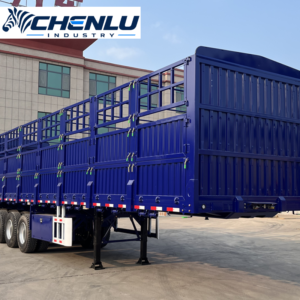
4 Axle Fence Cargo Semi Traile
4 Axle Fence Cargo Semi Traile Adding an axle effectively distributes the vehicle's axle load, increasing load-bearing capacity and reducing tire wear; combined with the high-fence design, it achieves the dual advantages of ultra-large volume and heavy-duty load-bearing capacity.
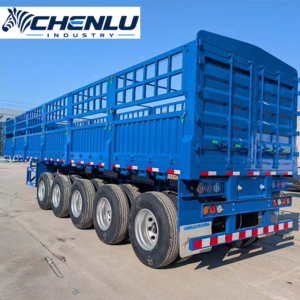
5 Axle Fence Semi Trailer
5 Axle Stake Semi Trailer: Featuring a robust five-axle design and high-quality stake side panels, this semi trailer is widely used in long-haul freight transport. Its strong load-bearing capacity and stable frame structure ensure secure cargo storage, making it suitable for transporting various bulk goods, spare parts, and daily necessities.
CHAPTER 1 — Fence Semi Trailer Guide: Types, Uses, Structure & Buying Considerations
1-1. What Is a Fence Semi Trailer and What Is It Used For?
A fence semi trailer is an open cargo semi trailer equipped with vertical stakes, side panels or fence structures around the loading platform. Compared with a basic flatbed trailer, the fence structure provides additional containment for cargo while keeping the loading area accessible from the sides and rear.
Fence semi trailers are widely used for transporting general cargo, agricultural products, construction materials, industrial goods and other medium- or heavy-duty loads. Depending on the configuration, the trailer can also be equipped with container locks for compatible container transportation.
The open design makes a fence cargo trailer particularly practical when cargo needs frequent loading and unloading or when the goods are too large or irregular for an enclosed trailer.
1-2. How Does a Fence Semi Trailer Work?
A fence semi trailer does not have its own engine. It is connected to a tractor through the kingpin and fifth wheel, while the trailer axles support the rear portion of the loaded trailer.
During transportation, the tractor provides the pulling force and the trailer’s running systems carry the cargo. The frame transfers the load between the deck, cross members, suspension and axles, while the fence panels and stakes help keep cargo within the designated loading area.
The trailer braking system, suspension and electrical system work together with the tractor to provide controlled and stable road operation.
1-3. What Can a Fence Semi Trailer Transport?
Fence semi trailers are designed for a broad range of cargo rather than one specific material. Common applications include:
- Bags and packaged goods
- Agricultural products and farm materials
- Grain and other suitable bulk cargo
- Steel products and metal materials
- Timber and pipes
- Construction materials
- Machinery and industrial equipment
- Tiles and building products
- Other general cargo suitable for an open trailer
For agricultural and livestock-related applications, the fence configuration can provide ventilation and convenient access. However, the exact trailer design should be selected according to the cargo type, loading method and applicable transportation regulations.
1-4. What Are the Main Types of Fence Semi Trailers?
Fence semi trailers can be configured in different ways according to axle arrangement, deck length, fence height and cargo requirements.
Common configurations include 2-axle, 3-axle and 4-axle fence semi trailers. Longer or heavier-duty configurations can also be developed according to local road regulations and the required payload.
Another important difference is the fence structure. Some trailers use fixed side panels, while others use removable stakes and detachable panels. The side structure may also use flat panels or corrugated panels depending on the required strength and appearance.
For customers who need more flexibility, a multi-purpose fence trailer can combine an open cargo deck with container locks and removable fence components.
1-5. Fence Semi Trailer Dimensions: Length, Width and Fence Height
Fence semi trailer dimensions depend on the cargo, axle configuration, local regulations and transportation requirements.
Trailer width is commonly designed around standard road transportation requirements, while overall length can vary according to the required loading area. Fence height is also customizable. Common side or fence heights may include approximately 600 mm, 800 mm, 1,000 mm or higher configurations, depending on the application.
Higher fences can provide greater containment for certain cargo, while lower structures can make loading and unloading easier. The best dimension is therefore determined by the actual cargo rather than simply choosing the largest available trailer.
1-6. How Much Weight Can a Fence Semi Trailer Carry?
The payload capacity of a fence semi trailer depends on its axle configuration, frame design, suspension, tires, braking system, deck construction and applicable road regulations.
Different markets may use different legal axle loads and gross vehicle weight limits. Therefore, a trailer advertised with a certain nominal capacity should not automatically be considered suitable for the same payload in every country.
For a practical configuration, the trailer should be matched to the actual cargo weight, cargo distribution and expected road conditions. A properly designed frame and running system are more important than simply selecting a high capacity number.
1-7. What Are the Main Components of a Fence Semi Trailer?
A typical fence semi trailer consists of several major systems:
- Main longitudinal beams and cross members
- Loading platform and deck plate
- Side panels, stakes and supporting posts
- Axles and suspension system
- Wheels and tires
- Kingpin and fifth-wheel connection
- Landing gear
- Brake system and air lines
- Electrical and lighting system
- Rear protection and other safety components
The structure of each component affects the overall load capacity, durability, stability and service life of the trailer.
1-8. How Do Fence Panels and Stakes Secure Cargo?
The fence system provides a physical boundary around the cargo deck. Stakes support the side panels and help prevent cargo from moving beyond the platform during normal transportation.
For packaged goods, agricultural products, bags, timber and other suitable cargo, the fence structure can make loading more convenient while providing additional containment. Removable stakes and panels can also make the trailer more flexible when different cargo types need to be transported.
However, fence panels are not a replacement for proper cargo securing. Heavy, unstable or high-center-of-gravity loads should still be secured using suitable chains, straps, binders or other approved cargo restraint equipment.
1-9. Fence Semi Trailer Suspension, Axles, Tires and Braking Systems
The running system determines how the fence semi trailer carries its load and responds to road conditions.
Mechanical leaf-spring suspension is widely used for heavy-duty cargo applications because of its simple structure and serviceability. Air suspension can also be selected when improved ride characteristics, axle-load management or specific market requirements are important.
Axle capacity should match the actual gross vehicle weight and local regulations. Tires should be selected according to axle load, road conditions and operating environment.
The braking system should also be matched to the tractor and local requirements. ABS and other braking configurations can be specified according to the destination market.
1-10. Fence Semi Trailer vs. Flatbed and Side Wall Trailers
A fence semi trailer, flatbed trailer and side wall trailer all use an open loading platform, but their cargo containment systems are different.
| Trailer Type | Main Structure | Typical Advantage |
|---|---|---|
| Flatbed Trailer | Open deck with no permanent side enclosure | Flexible loading for containers and large cargo |
| Side Wall Trailer | Deck with side boards or removable side panels | General cargo containment and easy side loading |
| Fence Semi Trailer | Deck with stakes and higher fence structures | Suitable for general and agricultural cargo requiring additional containment |
The right choice depends on cargo shape, loading method, required containment and whether the trailer must also transport containers.
1-11. How to Load and Secure Cargo on a Fence Semi Trailer
Before loading, the trailer should be inspected to ensure that the deck, fence panels, stakes, tires, brakes and connection components are in proper condition.
Cargo should be distributed as evenly as practical across the loading platform. Concentrated loads should be positioned according to the trailer’s load distribution requirements rather than simply placing the heaviest cargo at one end.
After loading, cargo should be secured using appropriate restraint equipment. The fence structure can provide additional containment, but it should not be relied upon as the only means of preventing cargo movement.
Before departure, check that all gates, stakes, panels, locking devices and cargo restraints are properly secured.
1-12. How to Choose the Right Fence Semi Trailer?
When selecting a fence semi trailer, buyers should evaluate the complete operating requirement instead of focusing only on the purchase price.
- Cargo type: Identify the weight, dimensions, packaging and loading method.
- Required capacity: Select axle and frame specifications based on actual payload requirements.
- Trailer dimensions: Consider road regulations and available loading space.
- Fence height: Choose a height that provides sufficient containment without unnecessarily increasing trailer weight.
- Suspension: Select mechanical or air suspension according to operating conditions.
- Loading method: Consider whether side loading, rear loading or crane loading is required.
- Container transportation: Add container locks if compatible container transport is part of the application.
- Destination regulations: Confirm axle load, dimensions, braking and lighting requirements before production.
1-13. Fence Semi Trailer Maintenance and Safety Considerations
Regular inspection helps maintain the performance and service life of a fence cargo trailer. Particular attention should be given to tires, wheel components, suspension, brakes, air lines, lights, kingpin, landing gear and structural connections.
Fence panels and stakes should also be checked for cracks, deformation, loose fasteners or damaged welding. These components are exposed to repeated loading forces and should remain securely connected to the main frame.
After transporting heavy or uneven cargo, inspect the deck and frame for visible deformation or damage. Proper cargo distribution, correct tire pressure and timely maintenance can help reduce unnecessary wear during long-distance operation.
CHAPTER 2 — CHENLU INDUSTRY Fence Semi Trailer Manufacturing & Custom Solutions
2-1. CHENLU INDUSTRY Fence Semi Trailer Manufacturing Overview
CHENLU INDUSTRY manufactures fence semi trailers for general cargo, agricultural transportation, construction materials and other open-deck cargo applications.
Our fence cargo trailers can be configured according to payload, trailer length, fence height, axle arrangement, suspension type and destination-market requirements. The objective is to provide a practical combination of structural strength, cargo flexibility and operating efficiency.
Rather than using one fixed configuration for every customer, CHENLU can adjust the trailer design according to the actual cargo and working environment.
2-2. Fence Semi Trailer Frame and Steel Selection
The frame is the primary load-bearing structure of a fence semi trailer. It normally consists of longitudinal main beams, cross members and supporting structures that distribute cargo weight toward the suspension and axles.
Steel grade and section dimensions are selected according to the intended load and trailer design. High-strength structural steel can be used where appropriate to balance strength, durability and trailer weight.
The frame design should not be evaluated only by plate thickness. Beam geometry, cross-member arrangement, welding quality and load distribution all contribute to the overall structural performance.
2-3. Fence Panel, Stake and Cargo Board Structural Design
The fence system is one of the defining features of this trailer category. CHENLU can configure vertical stakes, side panels, rear gates and supporting structures according to the cargo requirement.
Fence panels can use different profiles and construction methods. Corrugated panels can provide additional stiffness, while other panel designs may be selected according to weight, appearance and application.
The connection between the fence structure and the main frame is also important. Reinforced mounting points help the trailer withstand repeated loading, unloading and road vibration.
2-4. Fence Height and Removable Stake Configuration
Fence height has a direct influence on cargo containment and loading convenience. CHENLU can customize the side or fence height according to the cargo characteristics and customer’s loading requirements.
Common configurations can include approximately 600 mm, 800 mm and 1,000 mm side structures, while taller designs can be considered for specific applications.
Removable stakes and detachable panels can also be used when customers need to switch between different cargo types. This allows the trailer to operate as a more flexible multi-purpose cargo platform.
2-5. Axles, Suspension, Tires and Braking Systems
CHENLU configures axles, suspension, tires and braking systems according to the required payload, road conditions and destination-market regulations.
Mechanical suspension can be selected for applications where simple construction and serviceability are priorities. Air suspension is available for applications requiring different ride and load-management characteristics.
Axle capacity, tire specifications and braking equipment are matched as a complete running system rather than selected independently. This helps ensure that the trailer configuration is suitable for its intended operating conditions.
2-6. Fence Semi Trailer Deck and Cargo Securing Configuration
The loading deck can be configured according to the type of cargo being transported. Different deck materials and surface designs can be selected depending on loading equipment, cargo weight and working conditions.
For cargo that requires additional restraint, CHENLU can provide suitable securing points and related accessories. The fence structure can provide containment, while chains, straps and other cargo restraint systems can be used according to the cargo type.
A properly designed deck should provide sufficient strength without adding unnecessary dead weight to the complete trailer.
2-7. Container Lock and Multi-Purpose Fence Trailer Options
Some fence semi trailers are required to perform more than one transportation task. For customers who need container transportation in addition to general cargo, compatible container locks can be integrated into the deck design.
This type of multi-purpose configuration allows the trailer to be adapted to different transport requirements without completely changing the trailer platform.
Container lock position and deck configuration should be determined according to the container size and the required loading arrangement.
2-8. Fence Semi Trailer Dimensions and Load Capacity Customization
CHENLU can customize trailer dimensions and load-bearing configurations according to customer requirements and destination regulations.
Important parameters include overall length, width, deck height, fence height, axle number, axle spacing and rated load requirement.
For example, a 3-axle configuration may be suitable for many general cargo applications, while 4-axle or other configurations can be considered when greater load capacity or specific axle-load distribution is required.
Final dimensions and capacity should always be confirmed according to the actual cargo, tractor combination and local legal requirements.
2-9. Custom Fence Semi Trailers for Different Cargo
Different cargo requires different trailer configurations. CHENLU can develop fence semi trailer solutions for applications such as:
- General packaged cargo
- Agricultural products
- Timber and pipes
- Steel and metal products
- Construction materials
- Machinery and industrial equipment
- Bagged materials
- Other open-deck transportation applications
For cargo requiring greater containment, the fence height can be increased. For oversized cargo, removable panels and stakes can provide greater loading flexibility.
2-10. CHENLU INDUSTRY Fence Semi Trailer Production Process
A fence semi trailer requires coordination between frame manufacturing, structural welding, running-gear installation and final assembly.
The general production process includes steel preparation, frame fabrication, cross-member installation, fence and stake assembly, axle and suspension installation, brake and electrical system installation, surface treatment and final inspection.
During production, the dimensions and positioning of major components are checked to ensure that the finished trailer matches the approved configuration.
2-11. How CHENLU Inspects Fence Semi Trailers Before Delivery
Before delivery, CHENLU checks the major structural and functional systems of the finished trailer.
- Frame and welding condition
- Fence panel and stake installation
- Axles and suspension
- Tire and wheel installation
- Brake system and air connections
- Electrical system and lighting
- Kingpin and landing gear
- Overall dimensions and configuration
Inspection requirements can also be adjusted according to the customer’s destination market and agreed technical specifications.
2-12. Fence Semi Trailer Painting, Protection, Packaging and Shipping
After fabrication and inspection, the trailer receives surface preparation and painting according to the agreed configuration. Proper surface treatment helps protect exposed steel components during storage and transportation.
For international shipment, the shipping method is selected according to trailer dimensions, destination and transportation cost. Depending on the project, fence components can be prepared or partially disassembled to improve shipping efficiency.
For sea transportation, appropriate protective measures can be applied to reduce the effects of moisture, salt air and handling during transit.
2-13. What Information Do You Need to Order a Fence Semi Trailer?
To configure a suitable fence semi trailer, customers should provide as much of the following information as possible:
- Type and weight of the cargo
- Required payload or gross vehicle weight
- Required trailer length and width
- Required fence or side wall height
- Preferred axle number and suspension type
- Container transportation requirements, if applicable
- Loading and unloading method
- Destination country or market
- Applicable road and axle-load requirements
- Preferred tire, brake and other component specifications
Based on these requirements, CHENLU INDUSTRY can recommend a suitable fence semi trailer configuration and develop the technical specification for production.
Send Inquiry
Tell us the trailer model, quantity, destination port and your main transport cargo. Our sales team will reply with a suitable configuration.