

Cement Bulker Trailer
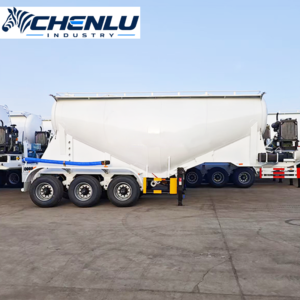
3 Axle Dry Bulk Trailer
3 Axle Bulk Cement Tanker Trailer boasts a volume of 35–50 cubic meters and features heavy-duty mechanical suspension that effectively absorbs road vibrations and lowers the center of gravity, making it a highly cost effective vehicle for transporting dry powder materials.
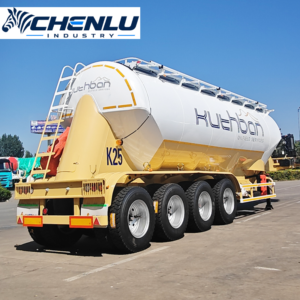
4 Axle Bulk Cement Tanker Trailer
4 Axle Bulk Cement Tanker Trailer features a large capacity tank and a four-axis design, with a volume of 40–60 cubic meters. It is made of high-quality, high-strength steel and is designed for efficient pneumatic unloading and long-distance transportation of dry powder materials such as cement, fly ash, and mineral powder.
CHAPTER 1 — Bulk Cement Tank Trailer Guide: Types, Uses, Capacity & Working Principle
1-1. What Is a Bulk Cement Tank Trailer?
A bulk cement tank trailer, also called a dry bulk tanker trailer or cement bulker trailer, is a specialized semi-trailer designed to transport and pneumatically discharge dry powder materials.
Unlike a conventional flatbed or dump trailer, the cargo is enclosed inside a sealed tank. The tank works together with an air system, fluidized bed and discharge pipeline to move dry bulk material from the trailer into a storage silo or other receiving equipment.
Bulk cement tank trailers are commonly used for cement transportation, but the same basic equipment can also be configured for other compatible dry powder materials. The trailer structure, tank volume, unloading system and running gear can be selected according to the cargo and operating requirements.
1-2. What Is a Bulk Cement Tank Trailer Used For?
Bulk cement tank trailers are mainly used to transport dry bulk powder materials between production facilities, storage terminals, construction sites and other locations where enclosed pneumatic transportation is required.
The sealed tank protects the cargo from direct exposure to rain, moisture and external contamination during transportation. Pneumatic unloading also allows the material to be transferred directly into a silo without manually handling individual bags or using conventional open-body unloading methods.
Typical applications include:
- Cement transportation for construction projects
- Delivery of cement from plants to storage silos
- Transportation of fly ash and other mineral powders
- Dry powder supply for industrial facilities
- Bulk material transportation between processing and storage locations
The final trailer configuration should always be matched to the properties of the material being transported and the receiving system used at the destination.
1-3. What Materials Can a Dry Bulk Tanker Transport?
A dry bulk tanker trailer can transport different types of dry powder or granular materials when the tank, pneumatic system and discharge configuration are suitable for the material.
Common examples include:
- Cement
- Fly ash
- Lime powder
- Mineral powder
- Selected industrial powders
- Other compatible dry bulk materials
Material characteristics are important when selecting a bulk tanker. Particle size, density, moisture sensitivity, flowability and discharge requirements can affect the tank structure and pneumatic unloading system.
A trailer designed specifically for cement should not automatically be assumed to be suitable for every powder. The cargo characteristics and unloading requirements should be confirmed before selecting the final configuration.
1-4. How Much Can a Bulk Cement Tank Trailer Carry?
The carrying capacity of a bulk cement tank trailer can be expressed in both payload weight and tank volume. These two measurements are related, but they are not interchangeable.
The actual payload depends on the density of the cement or other powder, the internal tank volume, trailer tare weight, axle capacity, tractor combination and applicable road regulations.
Bulk cement trailer configurations can be designed for different payload requirements. Examples in the market include approximately 30-ton, 40-ton, 45-ton and higher-payload applications, while the actual legal payload must be determined according to the complete tractor-trailer combination and operating region.
For this reason, buyers should specify both the required material volume and target payload when discussing a bulk cement tanker.
1-5. Bulk Cement Tank Trailer Capacity: Cubic Meters vs. Tons
Tank capacity is normally expressed in cubic meters, while transportation requirements are often discussed in tons. The relationship between the two depends on the bulk density of the material.
For example, a 40 m³ tank does not always carry the same number of tons of material because different powders have different densities. Cement, fly ash and other dry materials can produce different payloads in the same tank volume.
When selecting a trailer, buyers should therefore consider:
- Required tank volume in cubic meters
- Bulk density of the transported material
- Target payload in tons
- Permitted gross vehicle weight
- Axle load limitations
- Trailer tare weight
A properly matched tank size should provide the required material volume without creating an excessive payload or exceeding the legal axle and gross-weight limits.
1-6. What Are the Main Types of Bulk Cement Tank Trailers?
Bulk cement tank trailers can be manufactured in different tank shapes and structural configurations. The selection depends on tank volume, material characteristics, unloading requirements, center of gravity and operating conditions.
Common configurations include:
- V-type bulk cement tanker: Uses a V-shaped tank structure and is commonly used for dry bulk powder transportation.
- W-type bulk cement tanker: Uses a W-shaped tank arrangement and can be applied to larger-volume dry bulk transportation.
- Horizontal bulk cement tanker: Uses a more horizontally arranged tank structure for applications requiring a different loading, unloading or installation configuration.
Different tank structures can provide different combinations of capacity, stability, discharge performance and manufacturing requirements. The most suitable design should be selected according to the intended application rather than tank shape alone.
1-7. V Type vs. W Type vs. Horizontal Bulk Cement Tank Trailer
The main difference between V-type, W-type and horizontal bulk cement tank trailers is the internal and external tank arrangement used to store and discharge the dry bulk material.
| Tank Type | Main Characteristic | Typical Consideration |
|---|---|---|
| V Type | V-shaped tank structure | Common dry bulk and cement transportation applications |
| W Type | W-shaped tank arrangement | Suitable for larger-volume dry bulk configurations |
| Horizontal Type | Horizontally arranged tank structure | Used where a different tank and unloading arrangement is required |
The choice should take into account required volume, material flow characteristics, unloading distance, available compressor capacity, trailer dimensions and local transportation requirements.
1-8. How Does a Pneumatic Cement Tank Trailer Work?
A pneumatic cement tank trailer uses compressed air to move dry bulk material from the sealed tank through a discharge pipeline into a receiving silo or other storage system.
During unloading, the air compressor supplies compressed air to the tank’s air chamber and fluidization system. The air helps loosen and fluidize the powder so that it can flow toward the discharge outlet.
Once the material is properly fluidized and the unloading system is opened, the pressure difference helps carry the powder through the discharge pipeline.
The power source for the compressor can vary according to the trailer configuration. Some systems use the tractor PTO, while other configurations may use an independent diesel engine or another suitable power source.
1-9. How Does the Fluidized Bed System Help Unload Cement?
The fluidized bed is an important part of a pneumatic bulk cement trailer. Dry powder can become difficult to move when it is densely packed inside the tank, particularly around the discharge area.
The fluidization system introduces compressed air through a porous or air-permeable layer beneath the material. This reduces the resistance between powder particles and allows the material to behave more like a flowing substance.
When the material reaches the required flow condition, it can move toward the discharge outlet and enter the conveying pipeline.
A properly designed fluidized bed helps improve unloading efficiency and reduce the possibility of material remaining around the discharge area. Its design should match the tank geometry, powder characteristics and pneumatic system.
1-10. What Are the Main Components of a Bulk Cement Tank Trailer?
A bulk cement tank trailer combines several mechanical, pneumatic and running systems to complete transportation and unloading operations.
Major components normally include:
- Tank body: Stores and protects the dry bulk material during transportation.
- Fluidized bed: Helps loosen and move powder toward the discharge area.
- Air chamber: Receives compressed air and supports the fluidization process.
- Air compressor: Provides compressed air for pneumatic unloading.
- PTO or independent power system: Supplies power to the compressor according to the selected configuration.
- Discharge pipeline: Transfers material from the tank to the receiving silo.
- Valves and pressure-control components: Control airflow, material discharge and tank pressure.
- Pressure gauge and safety components: Help monitor and control the pneumatic system.
- Axles and suspension: Support the trailer and distribute the load to the road.
- Braking system: Provides controlled braking during transportation.
- Landing gear: Supports the front of the trailer when disconnected from the tractor.
The exact components and configuration vary according to tank volume, unloading requirements, operating region and customer specifications.
1-11. How Is a Bulk Cement Tank Trailer Loaded and Unloaded?
Loading and unloading procedures depend on the equipment used at the loading and receiving facilities. The tank is normally loaded through the designated filling system while maintaining the required operating procedures for the material.
During unloading, the trailer is positioned near the receiving silo and the discharge hose is connected to the appropriate inlet. The pneumatic system is then prepared according to the manufacturer’s operating procedure.
A typical pneumatic unloading sequence may include:
- Park the trailer in the designated unloading position.
- Connect the discharge hose and check the relevant connections.
- Confirm that the valves are in the required starting positions.
- Start the compressor or power system according to the operating instructions.
- Build the required pneumatic pressure within the approved operating range.
- Open the appropriate discharge and air-control valves.
- Allow the fluidized material to move through the discharge pipeline.
- Monitor tank pressure, hose movement and material flow during unloading.
- Stop the compressor and release pressure according to the operating procedure after unloading is complete.
The actual pressure values and valve sequence should always follow the specific trailer manufacturer’s operating instructions. Operators should never exceed the approved tank pressure.
1-12. What Should You Check Before Buying a Bulk Cement Tank Trailer?
Buying a bulk cement tanker requires more than comparing tank volume or price. The trailer should be evaluated as a complete transportation and pneumatic unloading system.
Important factors include:
- Required tank volume
- Target payload and material density
- Tank shape and internal structure
- Tank material and structural design
- Tank wall thickness and welding quality
- Fluidized bed design
- Air compressor capacity and power source
- Discharge pipeline and valve configuration
- Axle and suspension configuration
- Tire specification and load rating
- Brake and electrical systems
- Operating-country regulations
- Available spare parts and after-sales support
A lower purchase price does not necessarily mean a lower total operating cost. Tank construction, pneumatic equipment, component quality, maintenance requirements and unloading performance should all be considered when comparing suppliers.
1-13. Bulk Cement Tank Trailer Maintenance and Safety Considerations
Regular maintenance is important because a bulk cement tanker combines a pressure-related tank system, pneumatic equipment, running gear and braking components.
The air compressor should be inspected and maintained according to its operating requirements. Lubrication, air filters, hoses and related components should be checked regularly.
The pneumatic pipeline and valves should be inspected for leakage, blockage or damage. The tank and discharge system should also be kept clean so that hardened or accumulated material does not interfere with normal unloading.
Safety checks should include:
- Checking tank and pipeline connections
- Inspecting pressure gauges and safety components
- Checking discharge hoses for damage
- Inspecting compressor operation and lubrication
- Checking valves for proper operation
- Inspecting axles, suspension, tires and brakes
- Checking for abnormal air leakage
- Following the manufacturer’s approved operating pressure
Operators should never open a pressurized tank or disconnect a discharge hose before the system has been safely depressurized. Any abnormal pressure increase, blocked discharge line or severe hose vibration should be treated as a safety issue and investigated before continuing operation.
CHAPTER 2 — CHENLU INDUSTRY Bulk Cement Tank Trailer Manufacturing & Custom Solutions
2-1. CHENLU INDUSTRY Bulk Cement Tank Trailer Manufacturing Overview
CHENLU INDUSTRY develops bulk cement tank trailers and dry bulk tanker solutions for cement transportation, powder material delivery and pneumatic unloading applications.
A bulk cement trailer is a complete system rather than simply a tank mounted on a chassis. The tank body, fluidized bed, air chamber, compressor, discharge pipeline, valves, running gear and braking system must work together to provide reliable transportation and unloading performance.
CHENLU can configure the trailer according to the required tank volume, payload, material characteristics, unloading method, tractor combination and operating region.
For different projects, the tank structure, axle configuration, suspension, pneumatic equipment and accessories can be selected according to the customer’s actual transportation requirements.
2-2. Bulk Cement Tank Trailer Tank Body and Structural Design
The tank body is the main structural and storage component of a bulk cement trailer. It must provide sufficient internal volume while maintaining the required structural strength and supporting the pneumatic unloading process.
Tank design includes the overall geometry, internal air chamber arrangement, material flow path, discharge outlet and connection points for the pneumatic system.
The tank shape also affects the movement of dry powder inside the trailer. Properly designed slopes and discharge areas help guide material toward the outlet and reduce material accumulation during unloading.
For different capacities, CHENLU can develop the tank dimensions and structural arrangement around the required payload, volume and transportation conditions.
2-3. V Type, W Type and Horizontal Tank Configuration
CHENLU bulk cement tank trailers can be configured with different tank structures according to capacity and application requirements.
V-type tanks use a V-shaped structure to guide dry bulk material toward the discharge area. This configuration is commonly used for pneumatic cement transportation.
W-type designs provide another structural arrangement for larger-volume dry bulk applications and can be developed according to the required tank capacity and operating conditions.
Horizontal bulk tanker configurations can also be considered where the application requires a different tank arrangement.
The selected tank type should be evaluated together with material density, required volume, unloading performance, overall trailer height, center of gravity and local transportation requirements.
2-4. Steel Selection and Tank Wall Thickness
Material selection is an important part of bulk cement tanker manufacturing because the tank must combine structural strength, durability and reasonable tare weight.
Different steel grades and materials can be considered according to the required tank structure, operating environment, capacity and design requirements.
Tank wall thickness should not be selected only by using a fixed value for every trailer. It depends on the tank design, material selection, structural requirements, pressure-related design and manufacturing specifications.
The source configurations used for bulk cement tank trailers can include different tank materials and thicknesses depending on the model. CHENLU can select the appropriate specification according to the actual trailer design rather than treating one thickness as a universal standard.
Welding quality is equally important. Tank seams and structural joints should be manufactured according to the approved production and inspection requirements.
2-5. Fluidized Bed and Pneumatic Unloading System
The fluidized bed is one of the key systems that differentiates a pneumatic bulk cement tanker from a conventional dry cargo trailer.
CHENLU can configure the fluidized bed and air chamber according to the tank structure and the characteristics of the material being transported.
Compressed air enters the air chamber and passes through the fluidization system. This helps reduce powder resistance and allows dry material to move toward the discharge outlet.
The discharge opening, internal slope and fluidized area should be designed together. A suitable combination can help improve unloading performance and reduce residual material inside the tank.
The pneumatic system must also be matched with the compressor and discharge pipeline so that the complete system operates as one coordinated unit.
2-6. Air Compressor, PTO and Power System Configuration
The air compressor provides the compressed air required for pneumatic unloading. Its configuration should be selected according to the tank volume, material characteristics, required unloading performance and available power source.
One common approach is to use the tractor PTO to drive the compressor. This allows the trailer pneumatic system to use power from the tractor during unloading.
Other configurations can use an independent diesel engine or another suitable power source when the application requires greater independence from the tractor.
CHENLU can configure the power system around the customer’s operating conditions. The compressor, PTO, drive system, air lines and related components should be matched rather than selected independently.
2-7. Discharge Pipeline, Valves and Pressure Control
The discharge system connects the tank to the receiving silo and controls the movement of dry bulk material during unloading.
Depending on the configuration, the pneumatic system can include air inlet piping, check valves, ball valves, safety valves, pressure-relief components, discharge valves, butterfly valves, pressure gauges, discharge hoses and connection joints.
The pipeline layout should provide a suitable material flow path while keeping the number of unnecessary restrictions under control.
Pressure control is especially important for a pneumatic tanker. The operating pressure must remain within the approved range of the tank and pneumatic system.
CHENLU configures the discharge system according to the tank design, compressor, material characteristics and customer unloading requirements.
2-8. Axles, Suspension, Tires and Braking Systems
The running system supports the tank and cargo while transferring road forces through the axles, suspension and tires.
Bulk cement tank trailers can be configured with different axle numbers depending on payload, legal axle limits and market requirements. Three-axle configurations are common for many applications, while other axle arrangements may be considered for different payload requirements.
Suspension options can include mechanical leaf spring systems or air suspension according to the intended application.
Tire specifications are selected according to axle capacity, operating conditions and local requirements. The braking system can be configured with appropriate air brake components and related safety systems.
The final axle, suspension, tire and brake combination should be matched to the complete tractor-trailer combination rather than selected independently.
2-9. Bulk Cement Tank Trailer Capacity and Dimension Customization
CHENLU can develop bulk cement tank trailers in different tank volumes and overall dimensions according to the customer’s transportation requirements.
Common market capacities include approximately 25 m³, 30 m³, 35 m³, 38 m³, 40 m³, 50 m³ and 60 m³ configurations, while larger or specialized designs may also be developed according to the application.
Capacity customization involves more than changing the tank length. Tank geometry, axle arrangement, overall height, discharge system, center of gravity, compressor capacity and legal weight limits must also be considered.
Customers should therefore specify both the desired volume and target payload when requesting a quotation. CHENLU can then evaluate the complete trailer configuration.
2-10. Custom Dry Bulk Trailers for Different Powder Materials
Although cement is one of the most common applications, dry bulk tank trailers can be configured for other compatible powder materials.
CHENLU can evaluate different dry bulk applications based on material density, particle characteristics, moisture sensitivity, flowability and unloading requirements.
Potential applications can include:
- Cement: For construction projects, cement plants and storage-silo transportation.
- Fly ash: For industrial and construction-related bulk material transportation.
- Lime powder: For suitable industrial and construction applications.
- Mineral powders: For compatible dry bulk transportation requirements.
- Other dry powders: Subject to material compatibility with the selected tank and pneumatic system.
The correct configuration should be determined from the actual material properties rather than assuming that one pneumatic system is suitable for every powder.
2-11. CHENLU INDUSTRY Bulk Cement Trailer Production and Quality Inspection
Bulk cement trailer production includes structural fabrication, tank assembly, pneumatic-system installation, running-gear installation, surface treatment and final inspection.
A typical production process includes:
- Confirm the required trailer specifications and technical configuration.
- Prepare the tank and structural materials according to the approved design.
- Cut and form the required structural components.
- Assemble and weld the tank body and supporting structure.
- Install the fluidized bed, air chamber and discharge components.
- Install axles, suspension, braking system and other running components.
- Complete surface preparation and protective treatment.
- Install compressor, valves, pipelines, hoses and other pneumatic components.
- Complete electrical, lighting and accessory installation.
- Carry out final inspection according to the approved configuration.
Quality inspection can include dimensional checks, structural and welding inspection, component installation, pneumatic-system checks, running-gear inspection, braking components and other specified requirements.
The exact inspection procedure depends on the trailer configuration and customer requirements.
2-12. Bulk Cement Tank Trailer Painting, Protection and Shipping
After fabrication and inspection of the structural components, the trailer surface can be prepared for corrosion protection and finishing paint.
Surface preparation helps remove rust, contaminants and other material that could affect coating adhesion. Primer and finishing coatings can then be applied according to the selected paint system.
Protection during transportation is also important because bulk cement tank trailers may be exposed to moisture, salt air and other environmental conditions during storage and international shipping.
Depending on the trailer dimensions and shipping method, CHENLU can prepare completed trailers for suitable international transportation arrangements, including bulk shipping, Ro-Ro or other appropriate methods.
The final packaging and protection method should be selected according to the trailer dimensions, shipping route and transportation requirements.
2-13. What Information Do You Need to Order a Bulk Cement Tank Trailer?
To develop the correct bulk cement tank trailer configuration, customers should provide information about the material, capacity, transportation conditions and unloading system.
Important information includes:
- Type of dry bulk material
- Bulk density of the material
- Required tank volume in cubic meters
- Required payload in tons
- Preferred V-type, W-type or horizontal configuration
- Required axle number
- Mechanical or air suspension preference
- Tractor specifications
- PTO or independent compressor requirements
- Required unloading distance
- Receiving silo or unloading equipment information
- Operating country or region
- Applicable road and weight regulations
- Special pneumatic or discharge requirements
With this information, CHENLU INDUSTRY can evaluate the required tank structure, capacity, pneumatic system, running gear and accessories and develop a bulk cement tank trailer configuration suited to the intended application.
Send Inquiry
Tell us the trailer model, quantity, destination port and your main transport cargo. Our sales team will reply with a suitable configuration.