
Car carrier trailer
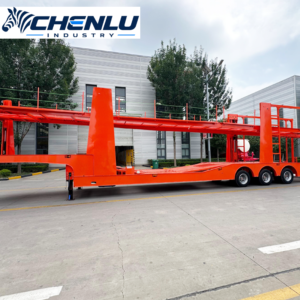
10 Car Carrier Semi Trailer
This double decker car carrier semi trailer can transport 6-10 passenger cars at a time; it is equipped with a hydraulic lifting deck for smooth and efficient vehicle movement between levels; and features multi-point tire locking throughout. It is specifically designed for the efficient transport of sedans, SUVs, and commercial vehicles.
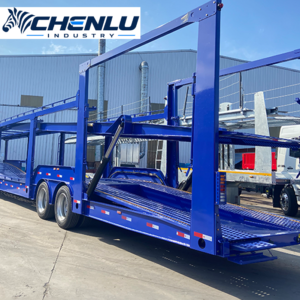
2 Axle Car Hauler Semi Trailer
2 axle design reduces the vehicle's weight and tire wear, resulting in lower rolling resistance and significant fuel savings. The main structure is welded from high-strength steel, balancing lightweight design with high load-bearing capacity, allowing for the transport of 6-8 standard passenger vehicles at a time.
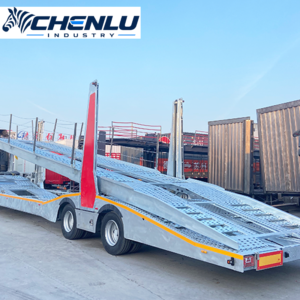
Galvanized Car Carrier Trailer
Galvanized Car Carrier Trailer is a high end car carrier model featuring a hot-dip galvanized surface treatment. The entire chassis and frame undergo hot-dip galvanizing for corrosion protection, providing exceptional resistance to salt spray, rust, and wear.
CHAPTER 1 — Car Carrier Trailer Guide: Types, Uses, Structure & Buying Considerations
1-1. What Is a Car Carrier Trailer and What Is It Used For?
A car carrier trailer, also known as a car transporter trailer or car hauler trailer, is a specialized trailer designed to transport multiple vehicles in a single trip. It is widely used for moving passenger cars, SUVs, light commercial vehicles and other road vehicles between manufacturers, dealerships, logistics centers and customers.
Unlike a conventional cargo trailer, a car carrier trailer is designed around the dimensions, wheel positions, ground clearance and loading requirements of vehicles. The loading platform normally includes ramps, vehicle restraints and, depending on the design, upper and lower decks.
By carrying several vehicles at the same time, a car carrier trailer can improve transportation efficiency and reduce the number of individual trips required for vehicle logistics.
1-2. How Does a Car Carrier Trailer Work?
A car carrier trailer is towed by a tractor through a kingpin and fifth-wheel connection. The tractor provides the driving and pulling force, while the trailer carries the vehicles and transfers the load through its frame, suspension and axles.
Vehicles are driven or winched onto the loading platforms using ramps or other loading equipment. Once positioned, each vehicle is secured using suitable wheel restraints, straps, chains or other approved securing devices.
For multi-level car carriers, the upper and lower platforms are arranged to make efficient use of the available trailer length and height. The exact structure depends on the number and type of vehicles being transported.
1-3. How Many Vehicles Can a Car Carrier Trailer Transport?
The number of vehicles a car carrier trailer can transport depends on trailer length, deck arrangement, vehicle dimensions, axle configuration and local road regulations.
Some car carriers use a single loading platform, while multi-level designs can transport more vehicles by using upper and lower loading areas. Depending on vehicle size and trailer configuration, a car carrier may be designed to transport several passenger vehicles in one trip.
The actual loading capacity should be calculated based on the dimensions and weight of the vehicles rather than using only a fixed vehicle count. Large SUVs, vans and light commercial vehicles require more loading space than compact passenger cars.
1-4. What Are the Main Types of Car Carrier Trailers?
Car carrier trailers can be classified according to their deck structure, axle arrangement, loading method and intended vehicle type.
Common configurations include single-deck car carriers, double-deck car carriers, open vehicle transport trailers and specialized vehicle transporters. Different axle and tire arrangements are also used to achieve different combinations of loading height, payload and available space.
Some designs use conventional semi-trailer structures, while other vehicle transport solutions use center-axle or specialized transporter configurations. The best choice depends on the local road system, tractor combination and transportation operation.
1-5. Single Deck vs. Double Deck Car Carrier Trailers
A single-deck car carrier uses one primary loading platform. Its structure is comparatively simple and can provide greater vertical clearance for vehicles with different heights.
A double-deck car carrier uses upper and lower loading platforms to increase vehicle capacity. This configuration makes better use of the available space and is particularly useful for vehicle logistics operations that transport several passenger vehicles on regular routes.
| Configuration | Main Advantage | Typical Consideration |
|---|---|---|
| Single Deck | Simple structure and greater loading flexibility | Fewer vehicles per trip |
| Double Deck | Higher vehicle carrying efficiency | Loading height and vehicle clearance must be carefully designed |
For double-deck designs, the distance between platforms must be matched to the height of the vehicles being transported.
1-6. How Do Axles and Tires Affect Car Carrier Trailer Design?
Axle and tire selection has a direct effect on the load capacity, deck height and overall structure of a car carrier trailer.
Different axle arrangements can create different amounts of available space beneath the loading platform. Tire diameter and width also affect the height of the chassis and the usable width around the wheels.
Small-diameter tires can help lower the loading platform in certain designs, which can be useful when overall vehicle height is an important consideration. However, tire selection must still meet the required axle load and operating conditions.
For this reason, the axle, suspension and tire system should be designed together with the loading platform rather than selected separately.
1-7. What Are the Main Components of a Car Carrier Trailer?
A typical car carrier trailer contains several systems that work together to transport vehicles safely:
- Main frame and longitudinal beams
- Upper and lower loading platforms where applicable
- Loading ramps and access structures
- Axles and suspension
- Wheels and tires
- Kingpin and tractor connection
- Landing gear
- Brake and air systems
- Electrical and lighting system
- Wheel chocks and vehicle securing equipment
- Hydraulic cylinders or other adjustment mechanisms on applicable designs
Because a vehicle carrier must combine high loading efficiency with controlled overall height, the relationship between these components is particularly important.
1-8. How Are Vehicles Loaded and Unloaded on a Car Carrier Trailer?
Vehicle loading normally begins by positioning the trailer on suitable level ground and preparing the loading ramps or platform.
The vehicle is then driven onto the designated loading position at a controlled speed. For upper decks or configurations with limited access, ramps, hydraulic platforms or other mechanical loading systems can be used.
After the vehicle reaches its assigned position, the parking brake should be applied and the wheels should be secured before moving to the next vehicle.
During unloading, the reverse process is followed. The loading sequence should take into account vehicle position, platform clearance and the overall stability of the trailer.
1-9. How Are Cars Secured During Transportation?
Vehicle securing is one of the most important parts of car carrier operation. Vehicles should remain stable on the loading platform during acceleration, braking, cornering and road vibration.
Depending on the trailer configuration and vehicle type, securing methods can include wheel chocks, wheel straps, chains or other suitable restraint devices.
The securing system should be positioned according to the vehicle manufacturer’s requirements and the trailer’s intended operating method. Restraints should be checked before departure and again when necessary during long-distance transportation.
Correct vehicle positioning is equally important. Vehicles should be distributed to maintain appropriate axle loads and avoid excessive loading on one section of the trailer.
1-10. Open vs. Enclosed Car Carrier Trailers: What Is the Difference?
Open and enclosed vehicle transport trailers are designed for different transportation requirements.
| Type | Main Characteristics | Typical Application |
|---|---|---|
| Open Car Carrier | Open loading platforms with easy vehicle access | Large-scale vehicle logistics and general vehicle transportation |
| Enclosed Car Carrier | Enclosed body with greater protection from external conditions | High-value, specialty or vehicles requiring additional protection |
Open car carriers are generally more practical for high-volume vehicle logistics because they provide convenient loading and unloading and allow efficient use of the trailer structure.
1-11. Car Carrier Trailer Dimensions, Capacity and Loading Height
Car carrier trailer dimensions are determined by the number of vehicles to be transported, vehicle sizes, road regulations and the design of the loading platforms.
Overall length and width affect how many vehicles can be positioned on each deck. Loading height is especially important for double-deck trailers because the combined height of the trailer, vehicles and loading structure must remain within the applicable road limit.
Ground clearance and platform height also affect loading convenience. A lower loading platform can make it easier to load vehicles with limited ground clearance, while the upper deck must provide sufficient clearance for the vehicles underneath and above it.
1-12. Car Carrier Trailer vs. Other Vehicle Transport Solutions
A car carrier trailer is primarily designed for transporting several vehicles efficiently. Other vehicle transport solutions may be more suitable for different applications.
| Transport Solution | Typical Purpose | Main Difference |
|---|---|---|
| Car Carrier Trailer | Multi-vehicle road transportation | Designed specifically around vehicle loading efficiency |
| Flatbed Trailer | General and oversized cargo | More flexible for non-vehicle cargo |
| Lowbed Trailer | Heavy machinery and equipment | Lower deck for high or heavy cargo |
| Vehicle Transport Truck | Shorter-distance or smaller-volume vehicle transportation | Truck and cargo body are integrated into one vehicle |
1-13. How to Choose the Right Car Carrier Trailer?
The right car carrier trailer should be selected according to the actual vehicle logistics operation rather than simply the maximum number of vehicles advertised.
- Vehicle types: Determine whether the trailer will transport sedans, SUVs, vans, pickups or light commercial vehicles.
- Vehicle quantity: Estimate the normal number of vehicles transported per trip.
- Vehicle dimensions: Consider length, width, wheelbase, height and ground clearance.
- Loading arrangement: Choose between single-deck and multi-level configurations.
- Road regulations: Confirm maximum legal dimensions, axle loads and overall height.
- Loading method: Consider ramps, hydraulic adjustment and other loading equipment.
- Tractor compatibility: Match the gooseneck, kingpin position and overall trailer design to the tractor.
- Operating environment: Consider road conditions, transportation distance and maintenance requirements.
A properly matched configuration can improve vehicle loading efficiency while maintaining safe axle loading and practical operating height.
CHAPTER 2 — CHENLU INDUSTRY Car Carrier Trailer Manufacturing & Custom Solutions
2-1. CHENLU INDUSTRY Car Carrier Trailer Manufacturing Overview
CHENLU INDUSTRY develops and manufactures car carrier trailers for vehicle logistics and multi-vehicle transportation applications.
Our car carrier solutions can be configured around the number and type of vehicles being transported, including different deck arrangements, axle configurations, loading systems and vehicle securing methods.
The design objective is to balance vehicle loading capacity, structural strength, overall height, operating stability and transportation efficiency.
2-2. Car Carrier Trailer Frame and Steel Selection
The main frame carries the combined weight of the trailer and the vehicles being transported. It normally consists of longitudinal beams, cross members and supporting structures connected to the axle and suspension system.
Steel selection is based on the required structural strength, trailer configuration and intended operating conditions. Appropriate structural steel can provide the strength required for repeated loading while avoiding unnecessary dead weight.
For a vehicle carrier, frame design must also consider the position of loading platforms, ramps and hydraulic components. The frame therefore needs to provide both load-bearing performance and sufficient space for the vehicle transport system.
2-3. Single Deck and Double Deck Car Carrier Structure
CHENLU can develop both single-deck and double-deck car carrier configurations according to the customer’s vehicle loading requirements.
A single-deck design provides a relatively simple loading platform and can be suitable when vehicle height or loading flexibility is the primary concern.
A double-deck design adds an upper loading platform to increase the number of vehicles transported per trip. The upper and lower structures must be carefully coordinated to provide sufficient vehicle clearance while maintaining the required overall height.
Platform layout can be adjusted according to the dimensions of the vehicles that the customer transports most frequently.
2-4. Upper and Lower Loading Platform Design
The upper and lower platforms form the core of a multi-level vehicle carrier. Their height, length and access arrangement determine how efficiently different vehicles can be loaded.
The lower deck should provide sufficient clearance around the wheels and vehicle body, while the upper deck must provide enough space for the vehicles positioned on it.
Platform sections can also be designed with suitable ramps or adjustable structures to simplify loading and unloading. For different vehicle combinations, the platform arrangement can be customized to improve usable loading space.
2-5. Gooseneck and Tractor Matching for Car Carrier Trailers
The gooseneck connects the trailer structure to the tractor and has an important influence on the loading height and available front loading space.
A suitable gooseneck design must take into account the tractor’s fifth-wheel height, kingpin position, rear axle arrangement and the required loading platform height.
If the tractor and trailer are not properly matched, excessive loading height can reduce usable vehicle clearance or create an overall-height problem. CHENLU therefore recommends confirming the tractor information before finalizing the trailer design.
2-6. Axles, Suspension, Tires and Braking Systems
CHENLU configures the axle and running system according to the expected vehicle load, trailer weight and destination-market requirements.
Different axle arrangements can influence available loading space and overall platform height. Tire size is also an important design factor because tire diameter affects chassis height and usable clearance around the wheels.
Suspension can be configured according to the operating environment and customer requirements. Braking and electrical systems are matched to the tractor and applicable regulations.
2-7. Hydraulic Loading, Ramps and Platform Adjustment
Vehicle carriers may use ramps, hydraulic cylinders or adjustable platforms to simplify vehicle loading and improve the use of available space.
Hydraulic systems can be used on applicable designs to raise, lower or adjust loading platforms. This can make it easier to accommodate different vehicle heights and loading positions.
The hydraulic components must be integrated with the structural frame so that the platform remains stable during adjustment and transportation.
For simpler configurations, mechanical ramps or other loading structures can also be used according to the customer’s operating requirements.
2-8. Vehicle Wheel Chocks and Cargo Securing Systems
Vehicle securing is a key part of CHENLU car carrier design. The trailer can be configured with wheel chocks, wheel stops, straps and other securing accessories according to the vehicle type and loading arrangement.
Wheel positioning equipment helps maintain the correct position of each vehicle on the platform. Additional restraints can be used when required by the vehicle type or transportation regulations.
The securing arrangement should also leave enough clearance for safe access during loading and unloading. The objective is to hold the vehicle securely without creating unnecessary interference with the vehicle body or wheels.
2-9. Car Carrier Trailer Capacity and Vehicle Loading Customization
Car carrier capacity is determined by both vehicle quantity and vehicle size. A trailer designed for compact passenger cars may accommodate a different number of vehicles than one intended for SUVs, vans or light commercial vehicles.
CHENLU can adjust deck length, platform spacing, axle configuration and loading arrangement according to the customer’s vehicle mix.
Instead of defining capacity only by a maximum vehicle count, the trailer should be designed around the actual combination of vehicle dimensions and weights that will be transported in normal operation.
2-10. Custom Car Carrier Trailers for Different Vehicle Types
CHENLU can develop vehicle carrier configurations for different types of road vehicles, including:
- Passenger cars and sedans
- SUVs and crossovers
- Vans and minivans
- Pickup trucks
- Light commercial vehicles
- Mixed vehicle combinations
When the trailer will transport mixed vehicles, the platform height and loading sequence should be designed around the largest and tallest vehicles expected in regular operation.
Customers can also provide vehicle drawings or dimensions so that the loading platforms and securing positions can be developed around the actual vehicle fleet.
2-11. CHENLU INDUSTRY Car Carrier Trailer Production Process
Car carrier trailer production involves structural fabrication, loading-platform assembly, running-gear installation and final system integration.
The general production process includes steel preparation, frame fabrication, cross-member installation, platform construction, ramp and hydraulic component installation where applicable, axle and suspension assembly, braking and electrical installation, surface treatment and final inspection.
Because car carriers contain multiple moving and adjustable structures, the position and operation of ramps, platforms and securing components are checked during final assembly.
2-12. How CHENLU Inspects Car Carrier Trailers Before Delivery
Before delivery, CHENLU checks the major structural, mechanical and loading systems of the finished car carrier trailer.
- Frame and welding quality
- Upper and lower platform structure where applicable
- Ramp and loading mechanism
- Hydraulic components where applicable
- Axles, suspension and tires
- Brake and air systems
- Electrical and lighting systems
- Kingpin and landing gear
- Wheel chocks and vehicle securing equipment
- Overall dimensions and configuration
For customized projects, inspection can also be carried out against the agreed technical drawings and specifications before shipment.
2-13. What Information Do You Need to Order a Car Carrier Trailer?
To develop the right car carrier trailer configuration, customers should provide the following information whenever possible:
- Types of vehicles to be transported
- Number of vehicles required per trip
- Vehicle length, width, height and weight
- Wheelbase and ground clearance where relevant
- Single-deck or double-deck preference
- Required trailer length and width
- Required loading height and overall height limitations
- Tractor model and fifth-wheel height
- Preferred axle and suspension configuration
- Loading ramp or hydraulic platform requirements
- Vehicle securing requirements
- Destination country and applicable regulations
With this information, CHENLU INDUSTRY can recommend a suitable car carrier trailer configuration and develop the technical specifications according to the customer’s vehicle transportation requirements.
Send Inquiry
Tell us the trailer model, quantity, destination port and your main transport cargo. Our sales team will reply with a suitable configuration.